


So you want to know how to start a luxury clothing brand. Maybe you have got sketches piling up on your desk, a Pinterest board that's basically a mood board for a label that doesn't exist yet, or a gut feeling that you could do this better than half the brands you scroll past. Well.. Been there, done that. And the good news is that you are not wrong to think it's possible.
The luxury fashion world is not the closed-off, old-money club it used to be. Today, many independent designers are launching real, profitable brands every year, and a lot of them are doing it with smaller teams and tighter budgets than you'd expect. The pain point here is that many people use the word "luxury" quite loosely these days, and it hides a lot of the actual work.
A high price tag doesn't make a brand luxury. What does is a mix of craftsmanship, a clear point of view, and a consistent experience that customers can feel from the first Instagram post to the moment they unbox their order. Let’s walk you through that process step by step, from figuring out who you are actually designing for to getting your first collection in front of real buyers.
RELATED READING: Magazine Cover Maker: How to Design Professional Covers Online
What Actually Makes a Clothing Brand "Luxury"
Before you touch a sketchbook or a spreadsheet, it helps to get clear on what separates luxury from just... expensive. A brand can charge $300 for a t-shirt and still feel cheap if the fabric is thin and the story behind it is nonexistent. Luxury clothing brands share a few traits:
- Quality that holds up: Better fabrics, tighter construction, garments meant to last years instead of one season.
- Scarcity: Limited runs, smaller batches, and a refusal to mass-produce just to chase volume.
- A story worth telling: Every recognizable name, from Ralph Lauren to smaller cult labels, has a narrative customers can repeat back to their friends.
- Consistency: The way the brand looks, photographs, and communicates never feels like it was thrown together last minute.
Keep that list in your back pocket. Every decision you make from here, your manufacturer, your pricing, your website, your product photos, either builds toward that perception or chips away at it. Here's the gap in plain terms:
Feature | Mass Market / Fast Fashion | Emerging Luxury Label |
Pricing Strategy | Cost-plus pricing, frequent discounts, seasonal sales | Value-based pricing with a typical retail markup of 4×–6× COGS (Cost of Goods Sold) |
Production Run | Large-scale production, often thousands of units per style | Small-batch production, typically 20–100 units per style to maintain exclusivity |
Fabric Sourcing | Standard synthetic blends and cost-effective materials | Premium fabrics such as high-GSM organic cotton, silk, cashmere, fine wool, linen, and deadstock textiles |
Manufacturing | High-volume factories prioritising speed and low costs | Specialised manufacturers focused on craftsmanship, quality control, and smaller production runs |
Brand Positioning | Trend-driven and price-focused | Heritage, craftsmanship, exclusivity, and timeless design |
Marketing Focus | Promotions, influencer discounts, flash sales, and high-volume advertising | Storytelling, brand heritage, limited drops, collaborations, and aspirational campaigns |
Collections | Frequent launches with weekly or monthly drops | Carefully curated seasonal collections and limited-edition capsule releases |
Visual Content | Standard studio product photography with a focus on volume | Editorial-style campaigns, luxury lifestyle imagery, and AI-assisted lookbooks for early-stage concepts |
Customer Experience | Convenience and affordability | Personalised service, premium presentation, and memorable brand interactions |
Packaging & Unboxing | Basic polybags and standard shipping boxes | Luxury packaging with premium boxes, tissue paper, custom inserts, branded ribbons, and a high-end unboxing experience |
Nothing on that table is out of reach for a small brand. It's just a different set of decisions than the ones fast fashion makes.
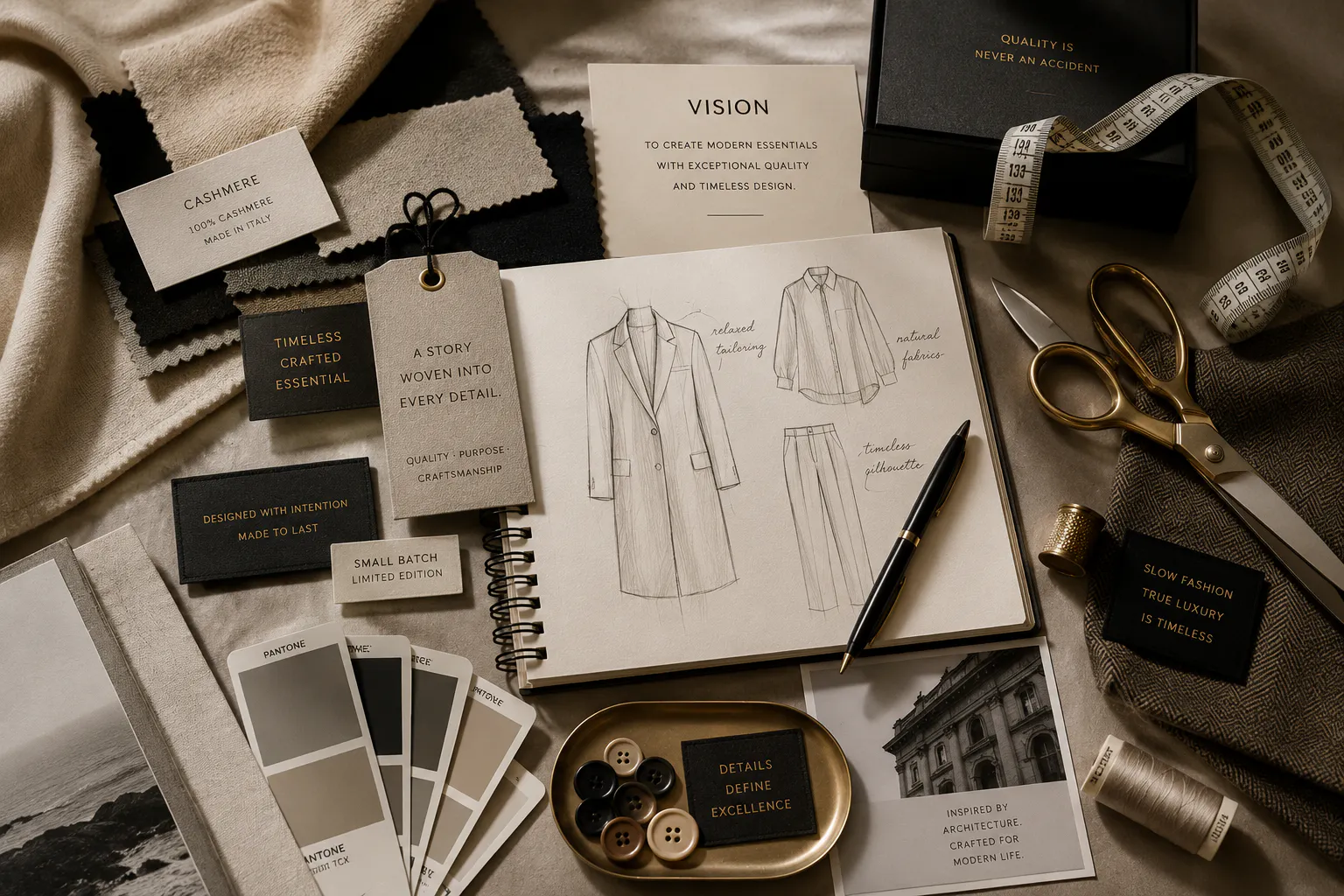
How to Start a Luxury Clothing Brand in 8 Simple Steps
Unlike launching a regular clothing label, building a luxury fashion brand requires careful planning. Your fabric choices, manufacturer, pricing, packaging, website, photography, and customer experience all contribute to how people perceive your business. Read along and find out how to start a luxury clothing brand in 8 easy and simple steps:
Step 1: Pick Your Niche and Don't Wander From It
You can't build a brand for "everyone." Trying to appeal to every kind of shopper is usually the fastest way to end up looking like nobody in particular. Ask yourself who you are actually dressing. Is it minimalist tailoring for people who want quiet luxury aesthetic? Streetwear-influenced pieces for a younger, hype-driven crowd? Sustainable, slow-fashion basics for people tired of fast fashion?
Once you have picked a lane, go research the people in it obsessively. What do they already buy? What do they complain about on Reddit or in reviews? What price point feels justified to them, and where do they draw the line at "too much"? The answers should shape your first collection more than your own personal taste does.
Benchmark Brands Doing It Right:
Before designing your first garment, study the brands that have mastered specific angles of luxury:
Brunello Cucinelli: The gold standard for "quiet luxury," understated elegance, and story-driven pricing.
Loro Piana: Proves that material sourcing (securing the world's finest cashmere and vicuña) can be your primary competitive advantage.
Kith: Blends luxury streetwear with limited drops and high-profile collaborations to build extreme demand through scarcity.
The Row: Demonstrates how flawless tailoring and extreme minimalism can command top-tier pricing without relying on visible logos.
RELATED READING: AI Clothes Color Changer: Change Outfit Colors Online Instantly
Step 2: Find the Right Manufacturer
This is where a lot of first-time designers get stuck, and understandably so. Your manufacturer isn't just a vendor, they are the difference between garments that look like samples and garments that look like they belong on a boutique rack.
Before you email a single factory, put together a tech pack. This is basically your garment's blueprint: flat sketches, exact measurements, GSM fabric weight, stitch details, and trim specs (buttons, zippers, labels).
Factories get flooded with vague "hey I want to make a hoodie" messages every day, and those get ignored or handed off to whoever's least busy. A tight tech pack signals you are serious and gets you taken seriously in return.
Once your tech pack is ready, here's where to actually find manufacturers:
- Domestic sourcing platforms: If a "made in USA" story matters to your brand, directories like Maker's Row connect designers with US factories, and manufacturers like The Evans Group (TEG) specifically work with low-MOQ luxury and emerging labels.
- Fabric trade shows: There's no substitute for touching a fabric before you commit to 50 yards of it. Première Vision (held in Paris and New York) and Texworld are where luxury and mid-size brands go to source cashmere, silk, and high-grade cottons in person.
A few more things worth checking before you commit to any manufacturer:
- Communication - If they are slow or vague before you have even signed anything, that won't improve once money's on the line.
- Minimum order quantities (MOQs) - A manufacturer demanding 500 units per style can sink a small first run. Look for low-MOQ or no-minimum options while you are testing the market.
- Where they are based - This matters more than people think, especially if "made in USA" is part of your brand story. Domestic manufacturing usually means faster turnaround, easier quality checks, and a story that resonates with buyers who care about ethical production. Overseas manufacturing can lower costs but adds shipping time and makes quality control trickier from a distance.
- Sample quality - Always ask for a sample before committing to a full run. If the sample feels off, the bulk order will too.
Whether you go domestic or work with an overseas manufacturing partner, get everything in writing. Contracts, timelines, fabric specs, everything needs to be written down because more often than not, verbal agreements have a way of getting misremembered once production starts.
Step 3: Get Your Business Set Up Properly
The business of clothes runs on unglamorous paperwork just as much as it runs on design talent, and it's worth handling this early instead of scrambling later. At minimum, you will want to:
- Register your business entity (an LLC is common for small apparel brands, since it separates your personal assets from business liability).
- Trademark your brand name and logo before someone else does.
- Set up basic bookkeeping so you know your actual cost per garment, not just a rough guess.
- Understand import duties and tariffs if you are sourcing fabric or manufacturing internationally.
None of this is exciting, but skipping it tends to cost founders far more down the line than it would've cost to do it right the first time.
RELATED READING: 9 Best AI Fashion Model Tools for Clothing Brands in 2026 (Tested and Compared)
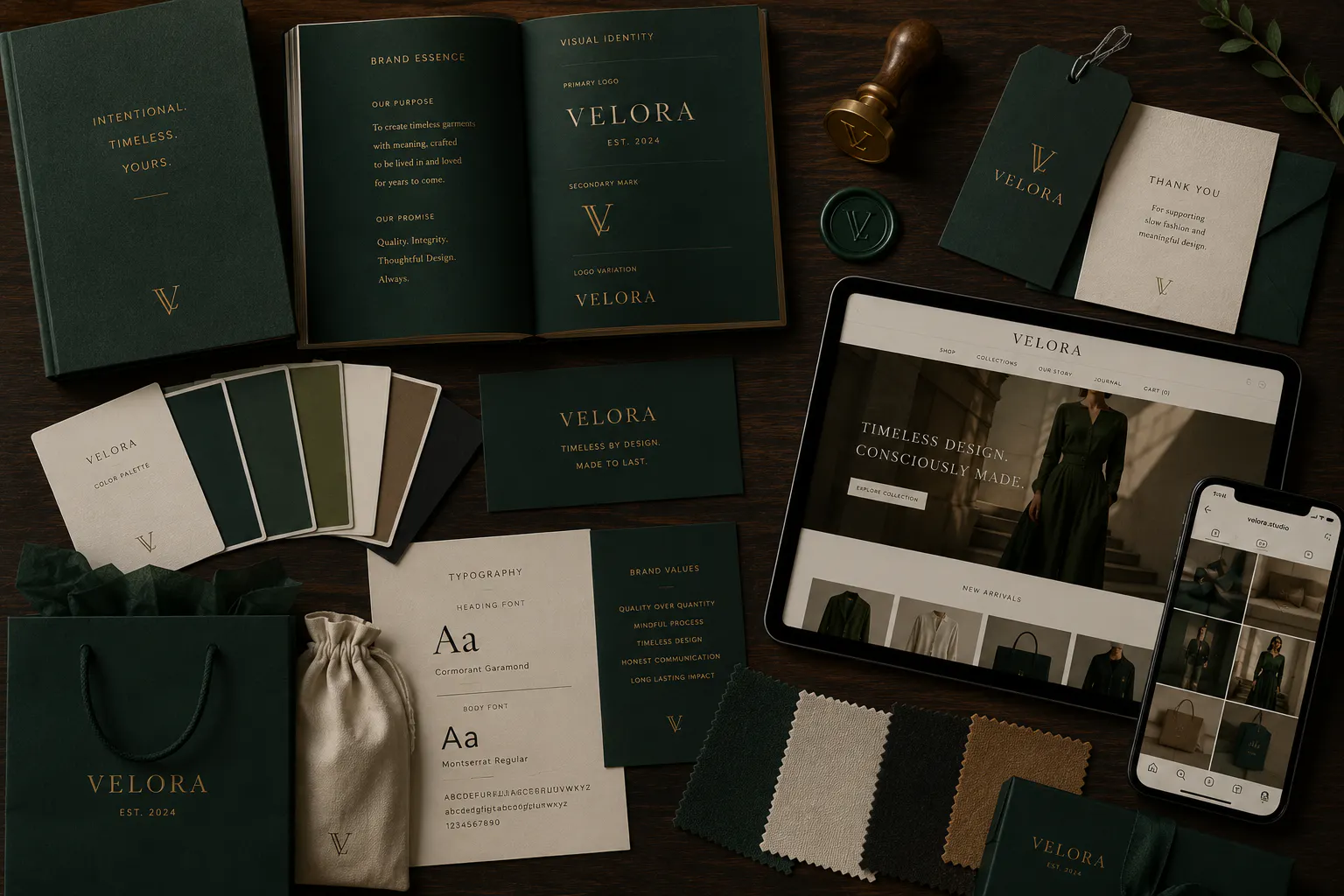
Step 4: Build a Brand Identity That Feels Intentional
Your name, logo, color palette, and tone of voice need to feel like they came from the same place. This is where a lot of otherwise-promising brands lose the thread. They will nail the clothes but half-ass the visual identity, and shoppers pick up on that mismatch instantly, even if they can't name why.
Think about the emotional world your brand lives in. Quiet and minimal? Bold and maximalist? Nostalgic? Every touchpoint, your packaging, your website fonts, luxury color palette, and your social media captions. Everything should reinforce the brand that you are building rather than fight it or go against it.
Pro Tip: The most successful independent luxury labels launch with just 8 to 12 exceptional, hyper-focused pieces rather than trying to release a massive, diluted catalogue.
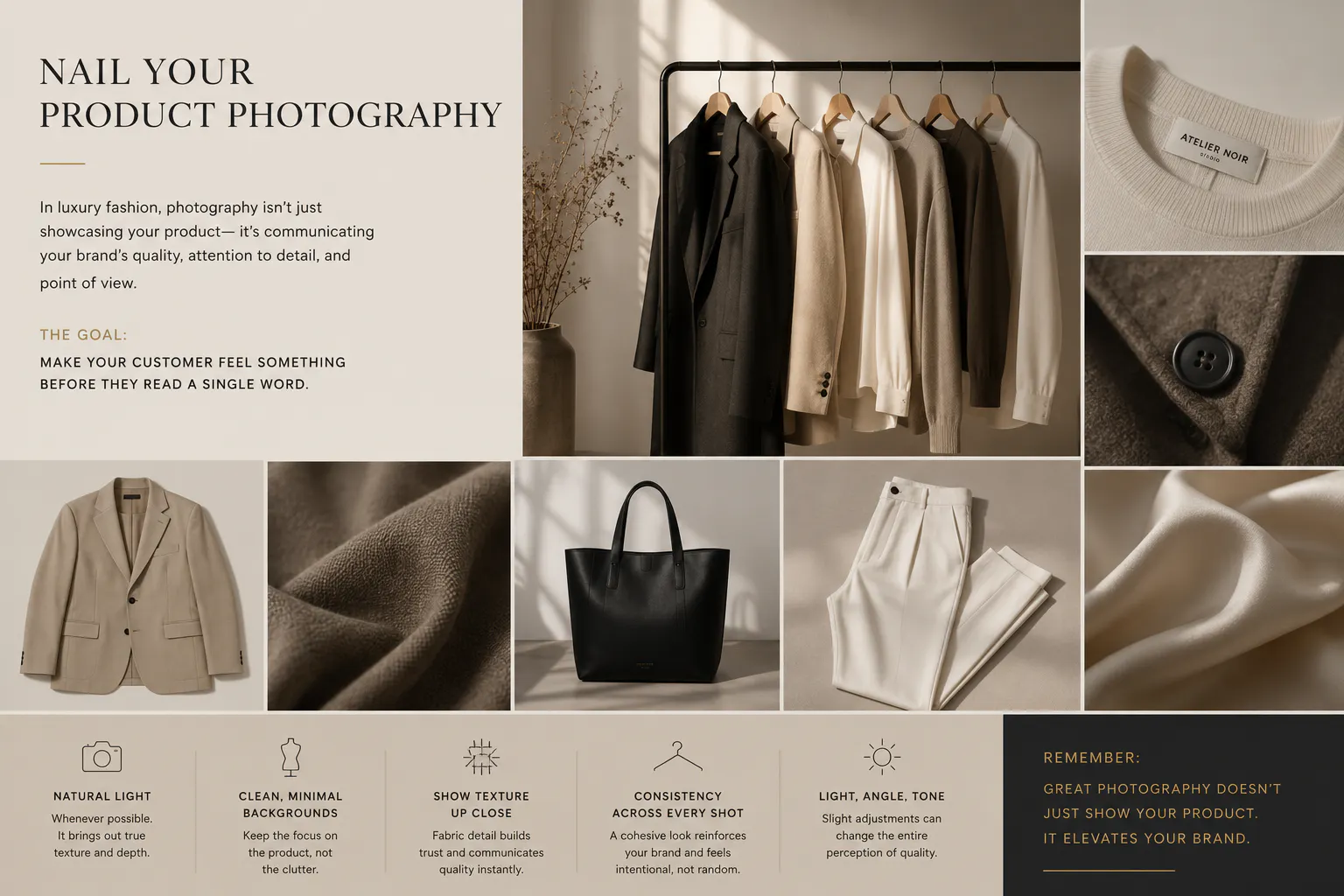
Step 5: Nail Your Product Photography (This Is Where a Lot of Brands Fall Apart)
Here's something nobody tells new designers enough: customers can't feel your fabric through a screen. All they have is the photo. And in luxury fashion, a slightly off photo doesn't just look unprofessional, it actively kills your customers’ trust. If your $400 jacket is shot in bad lighting on a wrinkled backdrop, it reads as a $40 jacket, no matter how good the stitching actually is.
Traditional studio shoots solve this, but they are expensive and slow, especially when you are launching a full collection and need consistent shots across dozens of SKUs. This is exactly the gap tools like Blend are built for.
Instead of booking a studio, a photographer, and a model for every drop, you can upload your clothing product images and generate studio-quality shots, AI model try-ons, ghost mannequin images, and lifestyle scenes, all styled to match your brand's aesthetic. For a luxury label especially, that consistency across every product photo does more for perceived value than people expect, and it means you can launch new pieces without waiting weeks for a photoshoot to get scheduled.
If you are building your brand around a "made in USA" story, or any specific aesthetic really, having a fast way to generate on-brand visuals means you can test new pieces, seasonal drops, and marketing creative without your visual quality ever dipping. Blend can easily help you streamline your workflow.
Step 6: Set Your Pricing (And Understand Why Luxury Costs What It Costs)
New designers often underprice their first collection out of nerves, thinking a lower price will win over hesitant buyers. In luxury, that usually backfires. Price is part of the signal you are sending. If your jacket costs the same as a mall brand's, customers will (often subconsciously) assume it's made the same way.
Here's where the math actually differs from standard retail. Most mass-market brands mark up 2x to 2.5x their cost of goods sold (COGS). Luxury brands operate on a different scale entirely:
- D2C luxury price = COGS x (4 to 6)
- Wholesale luxury price = COGS x (6 to 8)
So if your jacket costs $80 to produce (materials plus labor), your direct-to-consumer retail price should land somewhere between $320 and $480. That gap isn't arbitrary, it covers your marketing, your photography, your smaller batch sizes, and the margin you will need to fund your next collection.
When you are calculating price, also factor in:
- Cost of goods (fabric, trims, labor)
- Manufacturing minimums and any import costs
- Marketing and photography spend
- A margin that actually lets you reinvest in your next collection
Luxury pricing isn't about greed, it reflects the quality of materials, the smaller batch sizes, and the fact that nobody in your supply chain is being squeezed to hit a $9.99 price point.
RELATED READING: How to Use AI Models for Clothing: A Practical Guide with Blend
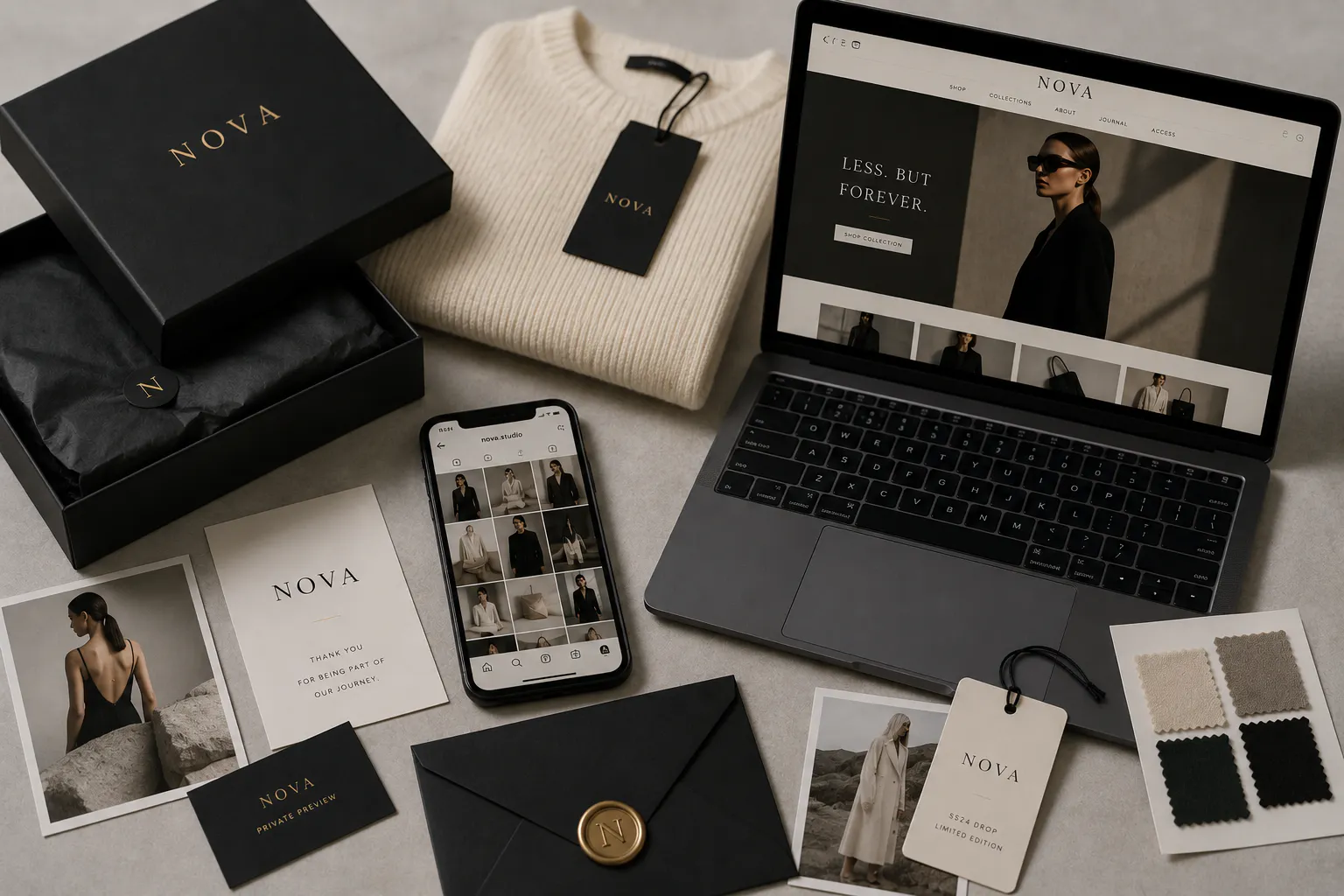
Step 7: Launch and Market Like the Brand You Are Building
Marketing a luxury label looks different than marketing a mass-market one. you are not chasing volume, you are chasing desirability. A few approaches that tend to work well:
- Limited drops instead of constant restocks. Scarcity does a lot of the persuading for you.
- Private previews or early-access lists for your most engaged followers.
- Partnerships with a handful of well-matched creators, rather than a wide, generic influencer blast.
- A genuinely polished digital storefront. If you are planning how to start a luxury clothing brand online, your site needs to load fast, photograph beautifully, and feel as considered as an in-person boutique.
This is another spot where consistent, high-end product imagery (again, something Blend's studio and lifestyle shot tools handle well) makes a real difference in conversion, since online shoppers are judging quality entirely through pixels.
Step 8: Keep Refining
Nobody nails their first collection perfectly, and that's fine. The designers who make it are the ones who keep adjusting, tightening their fit, refining their story, listening to what early customers say, and reinvesting in quality rather than cutting corners the moment cash gets tight.
Conclusion
Learning how to start a luxury clothing brand is about far more than designing premium garments. You are building an experience that customers aspire to be part of. So, focus on craftsmanship, be consistent, and use AI-powered apps like Blend to keep your images consistent. When customers believe in your vision as much as your products, you have laid the foundation for a luxury brand that can stand the test of time.