


Design is getting messier, warmer, and a lot more human this year but it's also getting weirder, glossier, and more AI-assisted at the same time. That's the paradox at the heart of design trends 2026, and if you run a brand, a store, or a website, it's worth knowing before you plan your next redesign.
So what are the design trends for 2026, really? Here are the 13 that are actually shaping graphic design, web design, and product visuals right now, plus where each one fits into your own work.
Design Trends 2026 at a Glance
Trend | What's changing | Quick win |
Imperfect by design | Perfection is out, texture and authorship are in | Let AI generate a starting point, refine it by hand |
Tactile, sensory visuals | Flat shots are being replaced by texture-rich imagery | Use AI product photography for lifestyle shots |
Fluid logos & adaptive branding | Static logos are becoming flexible, motion-ready systems | Test how your logo looks in motion, not just still |
Flexible, variable color palettes | Fixed brand colors are giving way to shifting palettes | Build a color "mood" instead of one locked hex code |
Cloud Dancer & saturated Y2K color | Two color directions, pick a lane | Audit your palette before adding trend colors |
Loud, expressive typography | Type is now doing the storytelling | Swap in one bold display font |
Collage-style compositions | Unexpected juxtapositions replace tidy grids | Layer photography, type, and texture in one visual |
Reality Warp: liminal & uncanny visuals | Surreal, dreamlike imagery is trending up sharply | Use distortion or surreal edits sparingly for impact |
Cinematic storytelling | Visuals are shot and framed like short films | Add a short, moody product video instead of a static image |
3D, motion & WebGL | Static visuals feel dated | Add scroll animation or a spinning product preview |
Liquid Glass / glassy UI | Translucent, glass-like interface elements are spreading fast | Try soft blur and translucency on cards or buttons |
Future Medieval & ornate nostalgia | Gothic, baroque textures mixed with digital effects | Use sparingly for niche or premium-feel branding |
Local, human-centered design | Global polish is losing to local authenticity | Lean into your own city or community story |
RELATED READING: How to Start a Luxury Clothing Brand (Without Burning Through Your Savings)
1. The Big Shift: Imperfect by Design
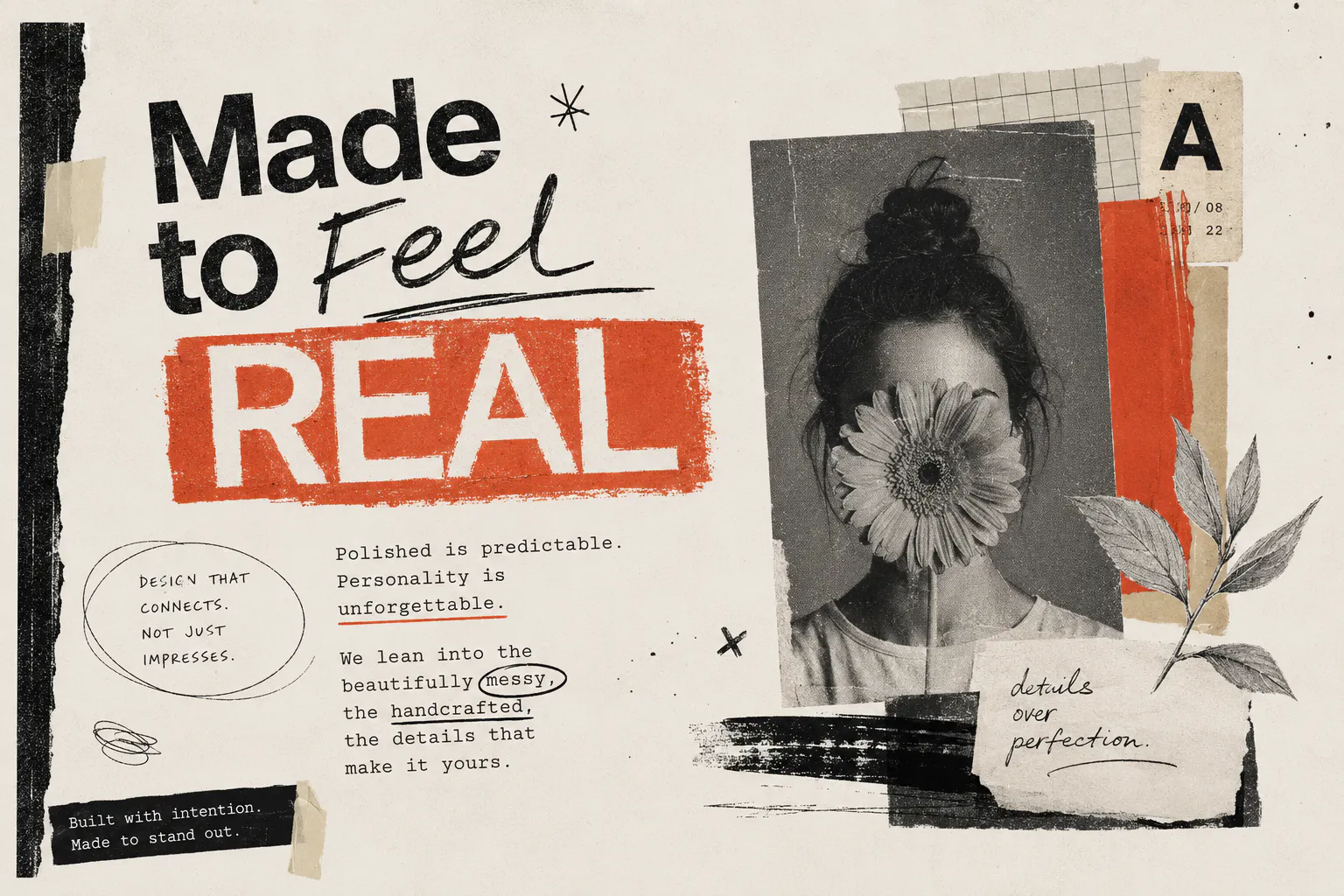
Clean, minimal, sterile visuals are fading. The loudest theme in graphic design trends right now is "imperfect by design."
What that looks like:
- Texture, grain, and hand-drawn touches instead of flawless renders
- Layouts that feel a little raw or unfinished on purpose
- A pullback from years of AI-generated sameness
- Visuals built to feel authored, not templated
Where AI fits in: AI can be used for rough ideas, textures, and starting points, then refined by hand so the final piece still feels human. You can use AI as a collaborator and not a hidden shortcut.
Why it matters for you: smaller brands can now get styled, on-brand visuals fast using AI product photography tools. Blend is built for exactly this. You still control the background, styling, and mood, so your store doesn't end up looking like every other AI-made shop.
2. Tactile, Sensory Visuals
Texture is the obsession of the year. Designers want you to feel something just by looking at it. Where you will see it:
- Puffy, squishy, touchable-looking 3D objects
- Renders that mimic fabric, clay, or soft plastic
- Photography with shadows, grain, and close-up detail over flat lighting
- Packaging and social posts leaning into sensory cues
Why it matters for product brands: flat white-background shots don't convert like they used to. Buyers respond better to lifestyle imagery with texture and context. A perfume bottle design shot with soft, directional light, a sweater photographed close enough to see the knit.
This is showing up heavily in luxury and beauty product design trends for 2026 specifically, where packaging and photography are being treated as one design decision, not two. Shooting this yourself usually means a studio, a photographer, and a budget most small brands don't have.
AI product photography tools like Blend turn a basic product photo into a styled lifestyle shot or AI-model image, no studio required.
3. Fluid Logos and Adaptive Visual Systems
Rigid, one-size-fits-all logos are being replaced by identity systems built to flex. What's changing:
- Logos that appear soft-edged, melting, or animated depending on platform
- Brand marks that adapt across screens, apps, and contexts instead of staying static
- Identity systems designed for motion first, print second
Before you finalize a new logo, check how it looks animated or resized for a social avatar. If it only works as a flat, still image, it's already behind.
RELATED READING: Interior Design Prompts: 25+ AI Prompts to Design Beautiful Spaces in Minutes
4. Flexible, Variable Color Palettes
Instead of one locked-in brand palette, more brands are using color ranges that shift and breathe. Here’s what they are doing differently in 2026:
- Variable color themes instead of fixed hex codes
- A recognizable color "mood" rather than a rigid scheme
- Palettes that adapt slightly across product lines or seasons while staying on-brand
Define your brand by a color feeling (warm, muted, energetic) instead of a single swatch, then let it flex slightly across campaigns.
5. Color of the Year: Soft, Calm, and Confident
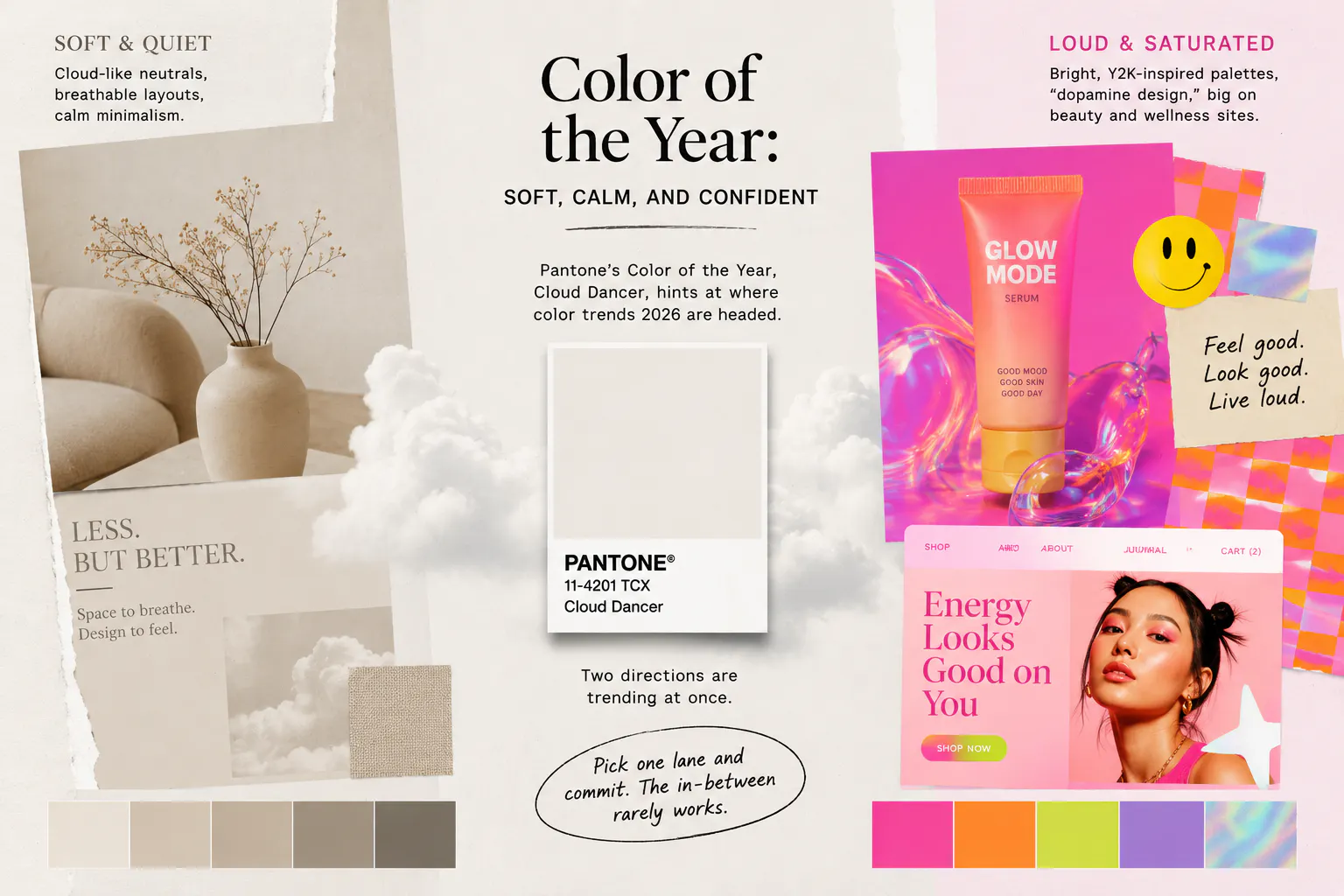
Pantone's Color of the Year, Cloud Dancer, hints at where color trends 2026 are headed. Two directions are trending at once:
- Soft and quiet: Cloud-like neutrals, breathable layouts, calm minimalism
- Loud and saturated: Bright, Y2K-inspired palettes, "dopamine design," big on beauty and wellness sites
Pick one lane and commit. The in-between rarely works.
6. Expressive, Storytelling Typography
Grid-locked, safe typography is losing ground. Type is doing the storytelling now. You can expect oversized, expressive headlines, custom lettering and hand-drawn type, distorted or stretched fonts, and type that moves or reacts on scroll. Swap in one bold display font for your headlines. It often does more for brand personality than a full redesign.
RELATED READING: Wes Anderson Style Photography: A Beginner's Guide to Creating Perfectly Symmetrical, Cinematic Photos
7. Collage-Style Compositions
Instead of neat grids, designers are layering photography, illustration, and type into deliberately unexpected combinations. Designers today are using mixed-media layouts with overlapping textures and images. They are also going for unusual pairings like a hand-drawn element next to a hyper-real photo.
Also, we are seeing a lot of a "scrapbook" type feel that reads as more human than a polished template. Here’s a quick tip. Try layering one texture or hand-drawn element over a clean product photo instead of leaving it on a flat background.
8. Reality Warp: Liminal and Uncanny Aesthetics
Surreal, dreamlike visuals are having a real moment. People are searching for liminal and uncanny aesthetics climbing fast.
Here’s what designers are doing in 2026:
- Distorted proportions, impossible spaces, and dream-logic compositions
- Playful absurdity mixed with photorealism
- AI used to push visuals past what's physically logical
Quick win: use this style sparingly, as an accent piece or campaign hero image, rather than your everyday brand visual. It's meant to stop the scroll, not carry your whole identity.
9. Cinematic Storytelling
Visuals are increasingly shot and framed like short films rather than static product shots. Try doing these:
- Moody lighting, shallow depth of field, and film-style color grading
- Short-form video replacing single static images in marketing
- A narrative moment captured instead of a posed shot
A five-second, cinematic product video often outperforms a single polished photo on social and product pages alike.
RELATED READING: 50+ Video Prompts: The Complete Guide to Writing AI Video Prompts That Actually Work
10. 3D and Interactive Motion Mechanics
Static images feel flat now. Web design trends this year lean hard into movement. You can go for 3D elements and WebGL-driven interactions on brand websites, spinning product previews and hover animations, and scroll-triggered animation on hero sections.
Some designers also prefer short-form AI-generated product videos on ecommerce listings. Skip the videographer. Blend's AI video features let sellers add motion across a whole catalog fast, without extravagant production.
11. Liquid Glass and Translucent UI
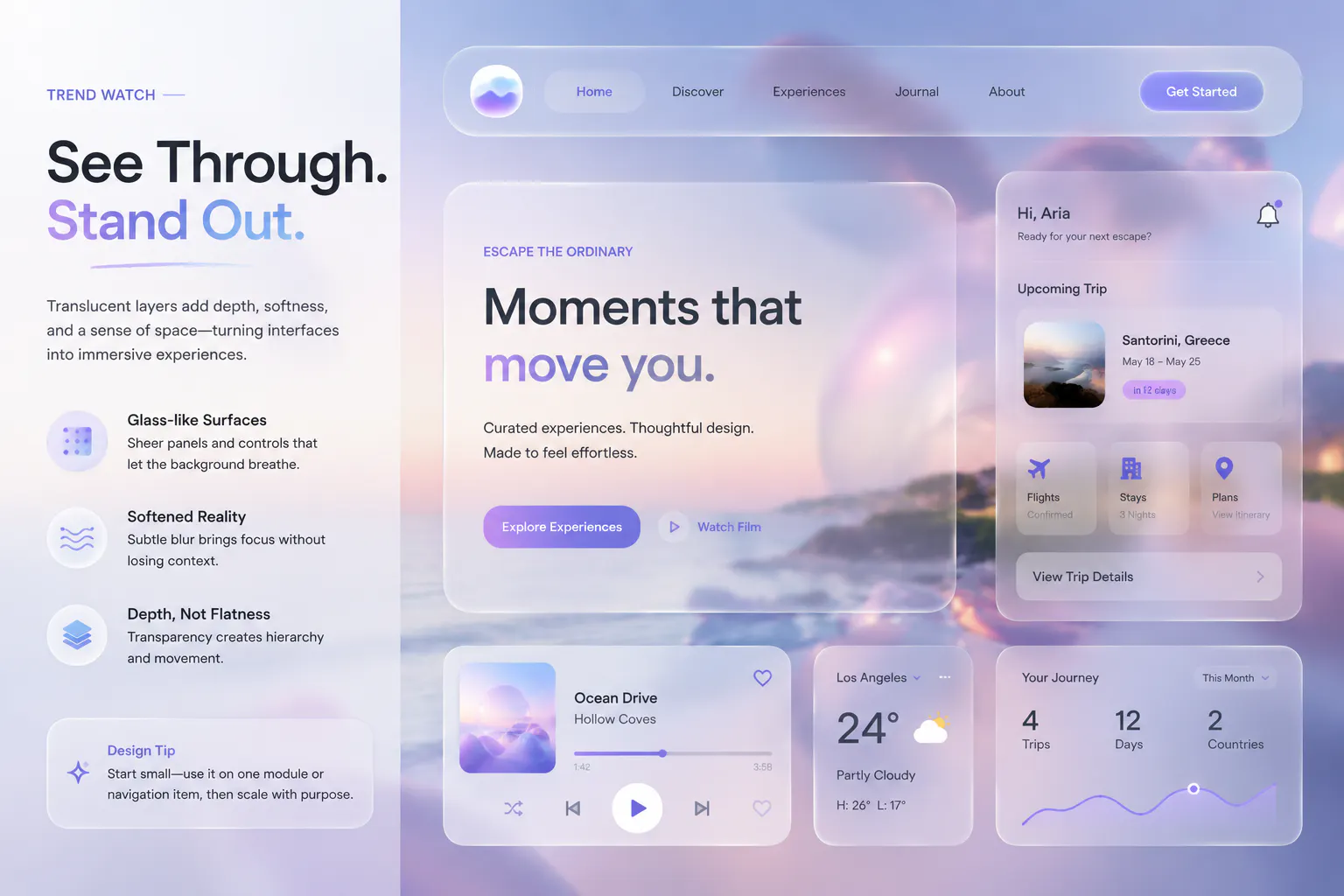
Apple's translucent "Liquid Glass" look moved fast from a concept effect to a system-wide aesthetic, and it's spreading into web and app design broadly.
It includes the aesthetics of:
- Frosted, translucent panels and buttons
- Soft blur layered over background imagery or color
- Depth created through layered transparency instead of flat cards
Try a translucent, blurred background on one card or navigation element before applying it site-wide.
12. Future Medieval Aesthetics
An unexpected trend gaining real traction: gothic, medieval, and baroque textures reimagined with digital effects. What's changing in 2026:
- Ornate, decorative fonts and border details
- Baroque textures paired with futuristic digital finishes
- A nostalgia-meets-tech aesthetic showing up in branding and packaging
This one works best for niche, premium, or storytelling-driven brands. It's not a fit for every business, so test it on a single product line or campaign first.
13. Local and Human-Centered Design
Another thread this year: local culture over generic "global brand" polish. Shows up as:
- Region-specific patterns, colors, and visual references
- Imagery grounded in a real place, not stock photo aesthetics
- Storytelling made for humans, not an algorithm
Why it's an advantage for small brands: you don't need to compete with big-budget global campaigns. Your own city, community, or story often reads as more current and more trustworthy.
RELATED READING: 20 Seasonal Marketing Ideas to Increase Sales Throughout the Year
Which Trends Should You Start With?
- Ecommerce sellers → tactile product photography, cinematic product video, and 3D/motion. These are what shoppers see first
- Website owners → loud typography, liquid glass UI touches, and scroll motion. Cheap updates with a noticeable payoff
- Branding-focused teams → fluid logos, flexible color palettes, and local storytelling
- Catalog-heavy brands → batch tools that keep visuals consistent without manual editing per product
Conclusion
You don't need to adopt all 13 trends at once. Pick two or three that fit your brand and budget, and keep a human hand somewhere in the process. That's the real throughline across all of design trends 2026. If you would rather skip the studio setup and get straight to styled, on-brand visuals, Blend is built for exactly that: fast enough to keep up with trends, flexible enough that the result still looks like you.