


If you have been scrolling Pinterest and kept landing on gingham curtains, dried wildflowers in mismatched jars, and kitchens that look like they belong in a countryside novel, you have already met cottagecore design. Movies like Pride & Prejudice, The Holiday, and Little Women have also helped shape this dreamy aesthetic with their cozy cottages, vintage furniture, floral fabrics, and warm, lived-in interiors.
It's a style that makes you want to slow down, bake fresh bread, curl up with a good book, and turn your home into a peaceful retreat inspired by nature and simpler living. It's warm. It's a little imperfect. And it is deeply nostalgic. A cottagecore room feels less like a showroom and more like somewhere your grandmother would've baked bread.
And you don't need an actual stone cottage in the English countryside to pull it off. You just need to understand cottagecore design well enough to make it your own.
Let's fully understand what the style actually means, why it's still everywhere in 2026, and a few ideas as to how you can bring it into your home or your product photos without a full renovation budget.
What Is Cottagecore Design?
At its core, cottagecore design is a style built around natural materials, soft colors, and a slightly imperfect, lived-in feeling. Think overgrown garden paths, candlelit kitchens, and furniture that's been passed down rather than bought new.
If you are wondering what is cottagecore interior design specifically, it's really the same idea applied room by room. Wood, linen, and stone instead of glass and steel, and personal, sentimental pieces instead of anything mass-produced.
People ask what is cottagecore fairly often, and honestly, the simplest answer is this: it's countryside living, reimagined for a modern home. It romanticizes rural European life without asking you to actually move to a farm.
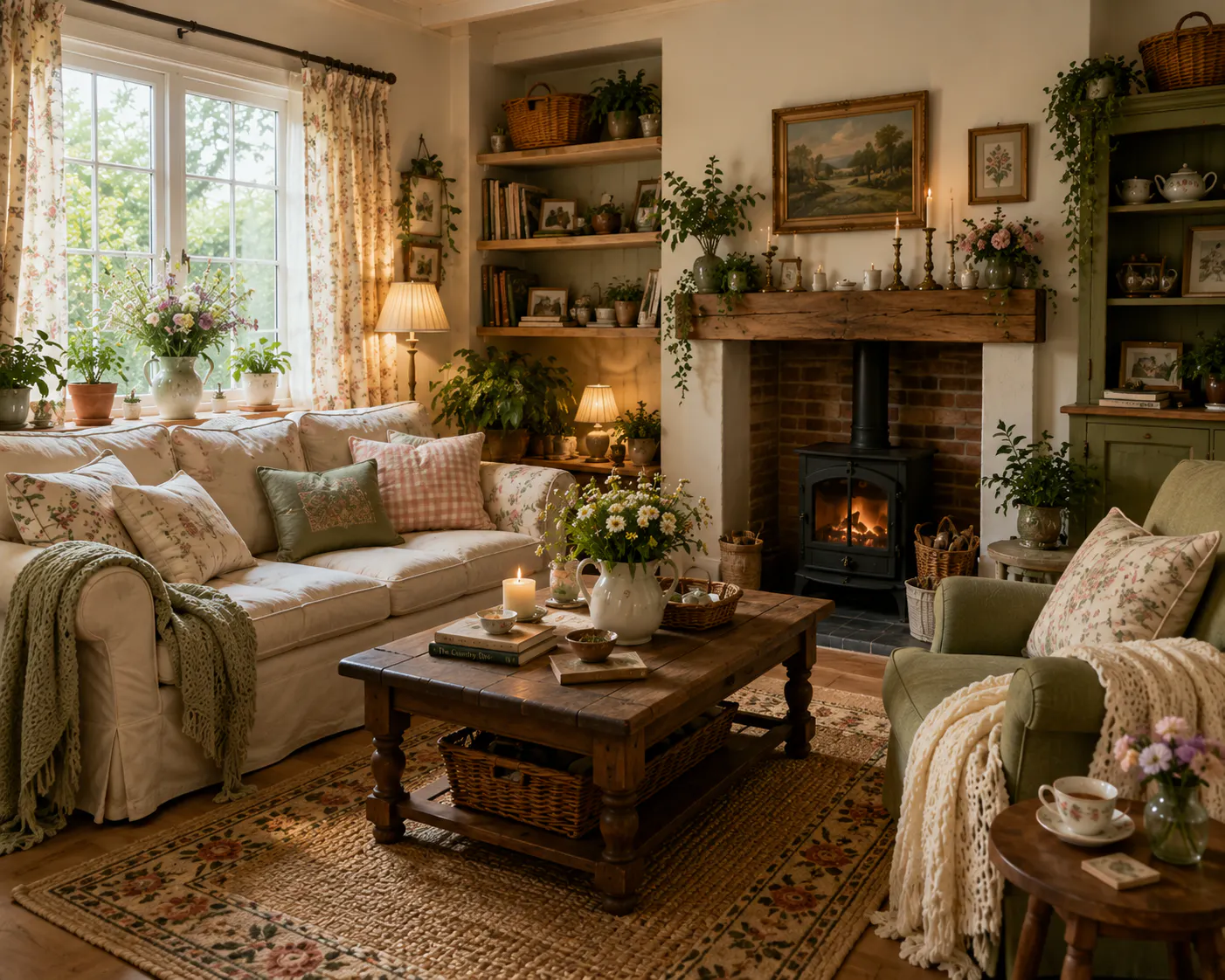
(Image created Using Blend's AI Image feature)
Why Cottagecore Interior Design Is Trending
This look didn't just appear out of nowhere. It's a direct response to the cold, sterile look that dominated the last decade. All white walls, glass surfaces, and furniture that looked like no one had ever actually sat on it.
People got tired of that. They wanted homes that felt human again. A few reasons this style has held on so long:
- It photographs beautifully, which matters a lot on Pinterest and Instagram
- It doesn't require expensive, brand-new furniture to pull off
- It leans into comfort and nostalgia, both of which feel especially appealing right now
- It rewards thrifted and vintage finds instead of punishing them
Trends built on perfection tend to burn out fast. Trends built on comfort, like this one, tend to last. It's also just a genuinely forgiving style of interior design. Cottagecore doesn't punish you for using thrifted or hand-me-down pieces, which is a big part of the appeal.
At the end of the day, it's the kind of interior design cottagecore fans keep coming back to precisely because it feels achievable, not aspirational.
RELATED READING: Interior Design Prompts: 25+ AI Prompts to Design Beautiful Spaces in Minutes
Key Elements of Cottagecore Interior Design
Every cottagecore space shares a few things in common, no matter which room you are working with:
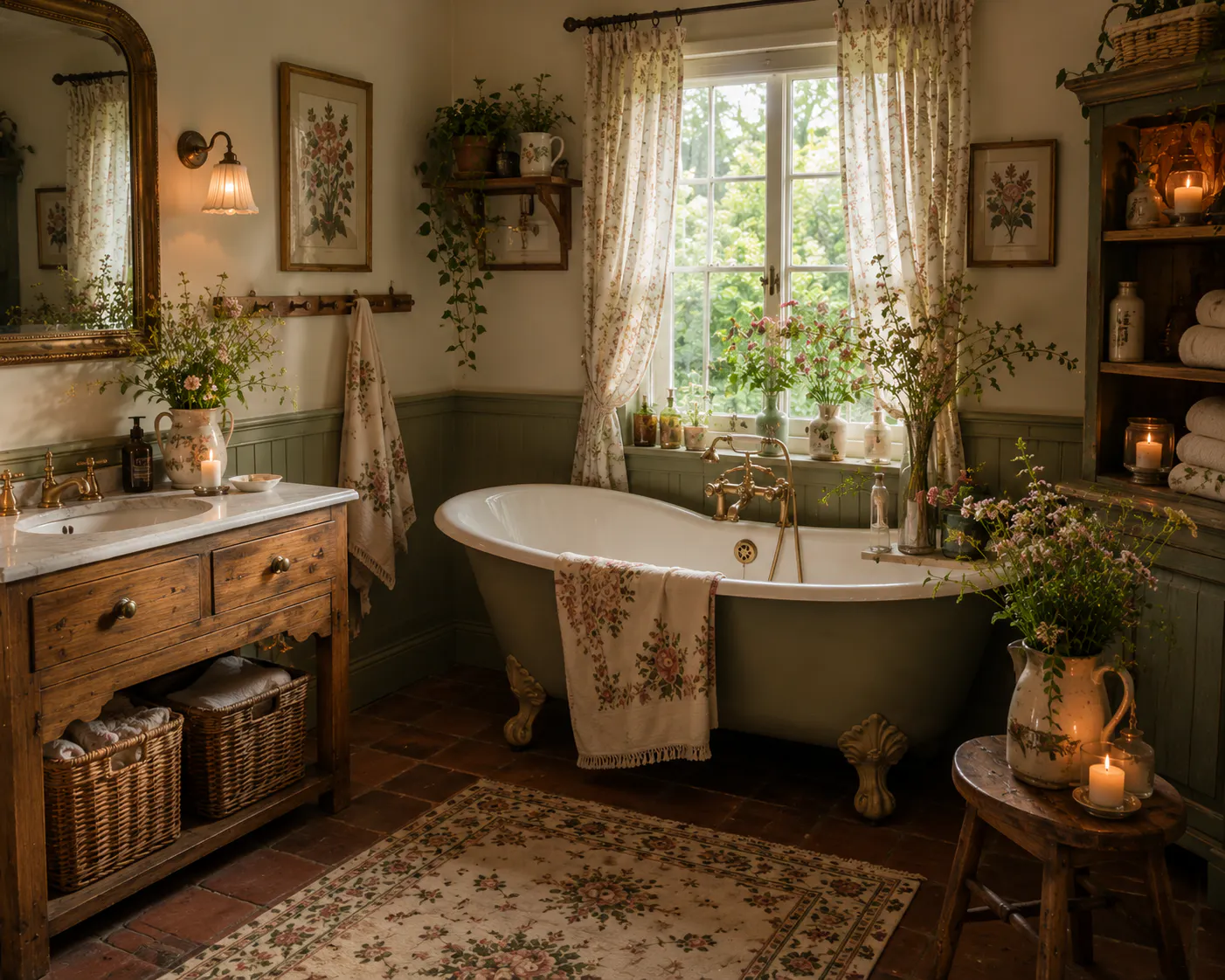
- Natural Materials: Wood, linen, rattan, and stone form the backbone of the style. A worn oak table or simple wood shelving instantly grounds a room.
- Soft, Earthy Colors: Sage green, buttery cream, dusty rose, and warm terracotta all pull from nature rather than a factory swatch.
- Layered Textures: Chunky knit throws, woven jute rugs, and handmade ceramics all add depth without feeling matched or overly styled.
- Vintage and Thrifted Pieces: A slightly warped chair leg or a quilt with a faded patch isn't a flaw here. It is part of the story.
- Imperfection as a Feature: Nothing is meant to look brand new or perfectly symmetrical. That's kind of the whole point.
Modern Cottagecore Interior Design: Mixing Old and New
Not everyone wants a fully rustic, storybook look and that's exactly where modern cottagecore interior design comes in. This updated take keeps the warmth and natural materials of classic cottagecore but pairs them with cleaner lines and a slightly more restrained color palette. Picture a farmhouse sink next to sleek matte cabinetry, or a vintage clock sitting on an otherwise minimalist shelf.
The approach works especially well if you are renovating a newer home and don't want it to feel like a costume. It lets you keep a few statement vintage pieces. A distressed desk, an antique mirror, while everything else stays simple and current.
RELATED READING: 5 Best Canva Alternatives in 2026: Top Tools for AI-Powered Design
5 Cottagecore Interior Design Ideas for Every Room
If you are ready to start decorating, here's a practical, room-by-room breakdown of cottagecore interior design ideas and if you sell products in this space, a quick note on how to stage each look for photos using Blend.
Room Space | Core Cottagecore Element | Visual Staging Tip for Sellers |
Kitchen | Open shelving, mismatched ceramics, farmhouse sinks | Stage kitchenware on raw oak textures against a sunlit window backdrop. |
Bedroom | Layered textiles, tapestry floral quilts, muted lighting | Use low-angle shots with fabric-shaded lamps to evoke a slow morning feel. |
Living Room | Scalloped jute rugs, historic dark wood hutches | Contrast delicate linen products against heavy, historic timber backgrounds. |
Bathroom | Woven baskets, linen curtains, matte soap dishes | Use tight, macro shots of products nestled next to simple stone textures. |
Small Nooks | Antique desks, window chairs, sentimental objects | Frame products in soft, natural light with one hero prop instead of a cluttered set. |
None of these require a full house overhaul. Pick one room, start there, and let the rest follow naturally. And if you are the one selling the ceramics, linens, or décor that make these spaces come together, Blend's Lifestyle Shot and AI Backgrounds tools can recreate that staging around your product without you needing to build the physical set yourself.
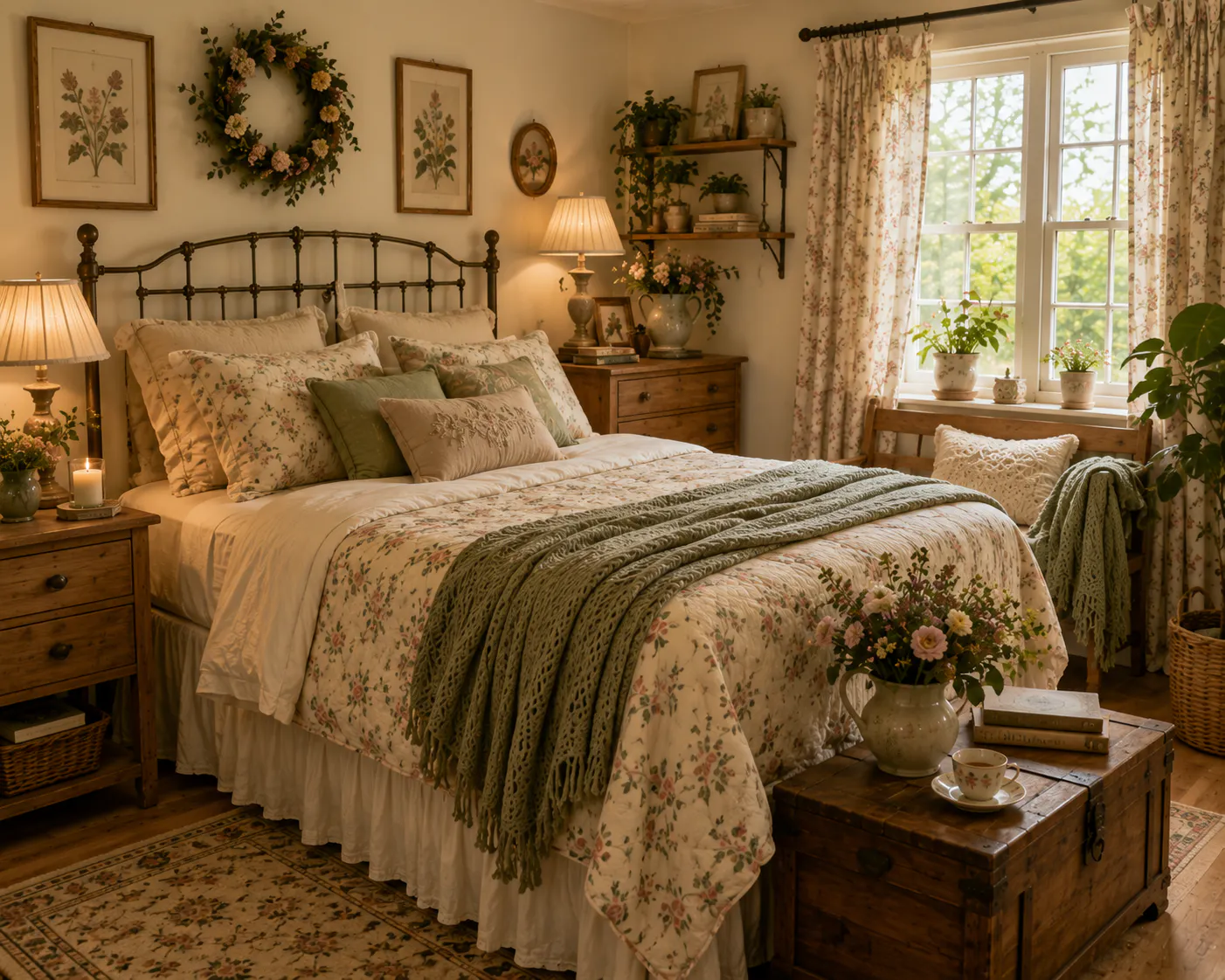
(Image created Using Blend's AI Image feature)
Dark Cottagecore Interior Design: A Moodier Take
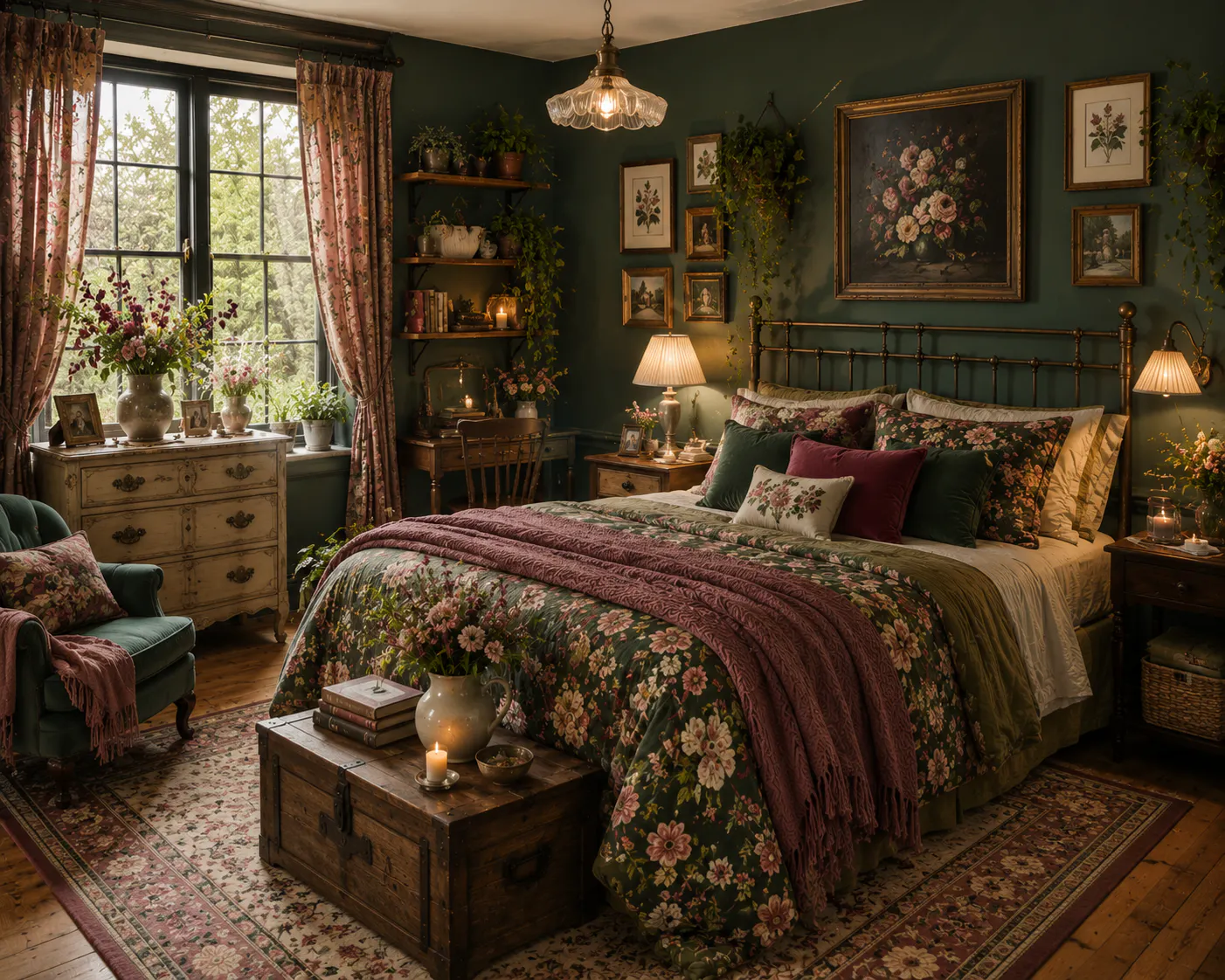
If pastel florals aren't really your thing, dark cottagecore interior design might be the better fit. This moodier take swaps the airy, sunlit palette for deep forest greens, aged wood tones, and candlelit ambers. It's the same emotional core. Warm, nostalgia, nature. But it is just expressed with more shadow and depth.
Searches for moody, dark cottagecore kitchens have climbed sharply over the past year, which says a lot. People aren't just chasing pretty rooms anymore. They want a cottagecore house that feels like somewhere to actually exhale, and darker tones tend to do that even better than pastels.
Whichever direction you lean, light or dark, the goal stays the same: colors and materials that feel like they came from outside, not off a shelf.
RELATED READING: How to Create High-Converting Sale Templates in 2026: 9 Proven Design Tips
Visualize Your Cottagecore Design with Blend
Here's where it gets useful if you sell home goods, décor, candles, or apparel online: cottagecore design isn't just a home trend anymore. It's also one of the most in-demand aesthetics in product photography.
Buyers respond to it. A candle glowing on a worn wood table, a ceramic mug in warm natural light, dried flowers on a windowsill. That kind of imagery converts a lot better than a plain white background ever will.
The problem is that actually producing content like that usually means booking a photographer, styling a full set, and hoping the lighting cooperates. That gets expensive fast, especially if you are updating a catalog regularly.
This is exactly the gap Blend was built to close. Instead of arranging a full photoshoot every time you want a cottagecore-style lifestyle shot, Blend lets you generate the scene around your actual product using AI while maintaining hyper-realistic texture accuracy. A few ways sellers use it:
- Lifestyle Shot Generator – Places your real product into a cozy, natural-light setting instantly.
- AI Backgrounds – Swaps a plain product photo into a rustic wood-table or garden-style scene.
- AI Models – Generates on-model shots for cottagecore-inspired clothing without booking a real model.
- Batch Photo Editor – Applies the same warm, consistent look across an entire catalog in one go.
- Studio Shot – Switches back to a clean white background instantly when a marketplace like Amazon or Etsy requires it.
If you are building a brand around this look, consistency matters more than people expect. A candle brand that photographs one product on a rustic wood table and the next on a plain white background feels disjointed to shoppers, even if they can't quite explain why. Blend prevents that from happening. It gives you the same warm tones, hyper-realistic shadows, and natural staging across your whole catalog.
Conclusion
Cottagecore design has held on this long because it taps into something people genuinely want right now: a home, or a brand, that feels human. From styling your own living room to going for a moodier dark cottagecore look, or trying to get your product catalog to match that same cozy, storybook mood, the principles stay the same. Lean into nature, embrace a little imperfection, and don't be afraid of warmth over sleekness.
And if the hard part for you is actually producing photos that match this aesthetic without hiring a full creative team, Blend is here to help you out by letting you visualize your cottagecore design the same way you would style a cottagecore room without breaking the bank.