




Running paid ads on Instagram and TikTok in 2026 means one thing above all else: you need a constant supply of fresh creative. Algorithms punish stale ads. Audiences scroll past anything they have seen before. And the content format that consistently outperforms polished brand videos is the one that looks like it was made by a real person on their phone.
That format is UGC, user-generated content. The problem for most ecommerce brands is sourcing enough of it. Real UGC from customers trickles in unpredictably. Paid UGC creators charge $150 to $450 per video, and managing a roster of creators across campaigns adds coordination overhead that small teams cannot absorb.
AI UGC is the workaround. Instead of hiring a real person to film a product review or a styled product shot, AI tools generate creator-style content using digital avatars, AI-generated models, and automated video production. The output looks native to social feeds, costs a fraction of real creator content, and can be produced at the volume that paid ad testing demands.
Here is what AI UGC actually is, how brands are using it, where it works well, and where real creators still have the edge.
How AI UGC Works
AI UGC is not a single tool or a single format. The term covers any content that mimics the look and feel of organic, user-created posts but is produced using AI rather than a real person. Understanding the different production methods helps you decide which approach fits your brand and your budget.
AI-Generated Product Photography

The simplest form of AI UGC is a product photo that looks like a real customer took it. Instead of a polished studio shot, the image shows the product in a casual, lived-in setting, on a kitchen counter, in a bathroom, on a nightstand, styled with everyday objects. The "user" in the photo is implied by the setting rather than visible in the frame.
AI tools can generate these scenes from a single product photo. Upload your product, select a lifestyle environment, and the AI places the item in a realistic scene that looks like someone snapped a quick photo of something they actually own. For static ad creatives and Instagram feed posts, AI-generated lifestyle images are often indistinguishable from real customer photos.
What makes AI lifestyle product photography so effective for UGC-style ads is the imperfection. Real customer photos are slightly off-center, casually lit, surrounded by everyday clutter. AI lifestyle tools can replicate that casual quality while still keeping the product clearly visible and well-represented. The result feels native to social feeds in a way that a perfectly lit studio shot never will.
AI Model Product Shots

A step beyond lifestyle scenes is putting the product on a person. AI UGC in this category shows a model wearing, holding, or using the product in a way that feels organic rather than studio-produced. The model is AI-generated, but the image reads as a candid lifestyle shot rather than a professional catalog image.
For apparel and accessories, AI model tools generate on-model shots that look like a real customer took a mirror selfie wearing the product, or a friend snapped a casual outdoor photo. The output works well for Instagram ads, product listing secondary images, and email marketing visuals.
The key to making AI model UGC effective is matching the model to the target customer. An AI model that looks like a typical buyer creates an immediate connection. Shoppers see themselves in the image, which is exactly what real UGC accomplishes. Choose models that reflect your actual customer demographics in terms of age, body type, and styling, not an aspirational ideal that feels disconnected from your buyer's reality.
AI Video UGC
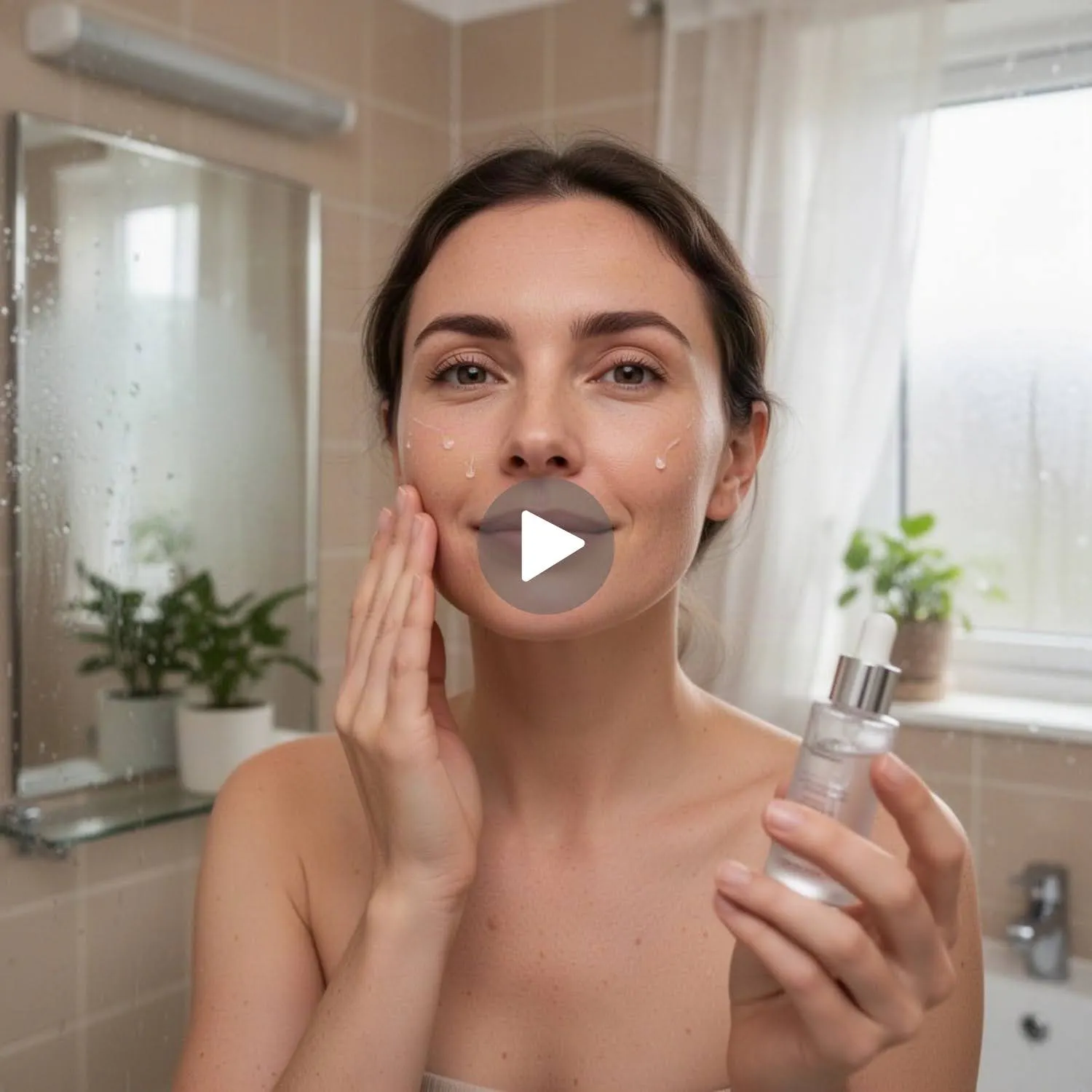
The most advanced form of AI UGC is video content featuring AI-generated avatars delivering scripted product pitches, testimonials, or demonstrations. Platforms like Arcads, HeyGen, and Creatify produce short-form videos where a digital person talks to the camera about a product, complete with natural-sounding voiceover, gestures, and expressions.
AI video UGC works well for:
- Hook testing across multiple ad variations without reshooting
- Localized content in different languages using the same avatar
- Product demo clips where the focus is on the item rather than the presenter
- Rapid creative refresh when ad fatigue sets in
For ecommerce brands, turning product photos into short product videos is one of the most practical applications. A short clip showing the product in a lifestyle setting with subtle motion, or a rotating product shot, outperforms static images in most paid social placements. The content does not need a talking avatar to be effective. Motion alone is enough to capture attention in a scroll-heavy feed.
The technology has improved significantly, but it is not perfect. Viewers can sometimes detect that the presenter is not real, especially in close-up shots or when the avatar's lip sync drifts slightly out of alignment. For product-focused content where the item is the star, AI video UGC performs well. For content that relies on personal credibility and emotional connection, real humans still deliver stronger results.
RELATED READING: AI Model Photography: How to Create Product Photos with AI Models
AI-Generated Social Media Content
Beyond ads, AI UGC also covers organic social content. Brands generate Instagram carousel posts, TikTok-style product showcases, and Pinterest pins using AI-created visuals rather than sourced customer photos. The content follows the visual grammar of real user posts, casual angles, natural lighting, imperfect framing, while being produced entirely in-house using AI tools.
For brands that struggle to source enough real customer photos to maintain a consistent posting schedule, AI-generated social content fills the gap without leaving the feed empty for days at a time. Consistency matters on social platforms. An account that posts three to five times per week builds algorithmic momentum that sporadic posting cannot match, and AI UGC makes that cadence sustainable even for small teams.
Why Ecommerce Brands Are Adopting AI UGC
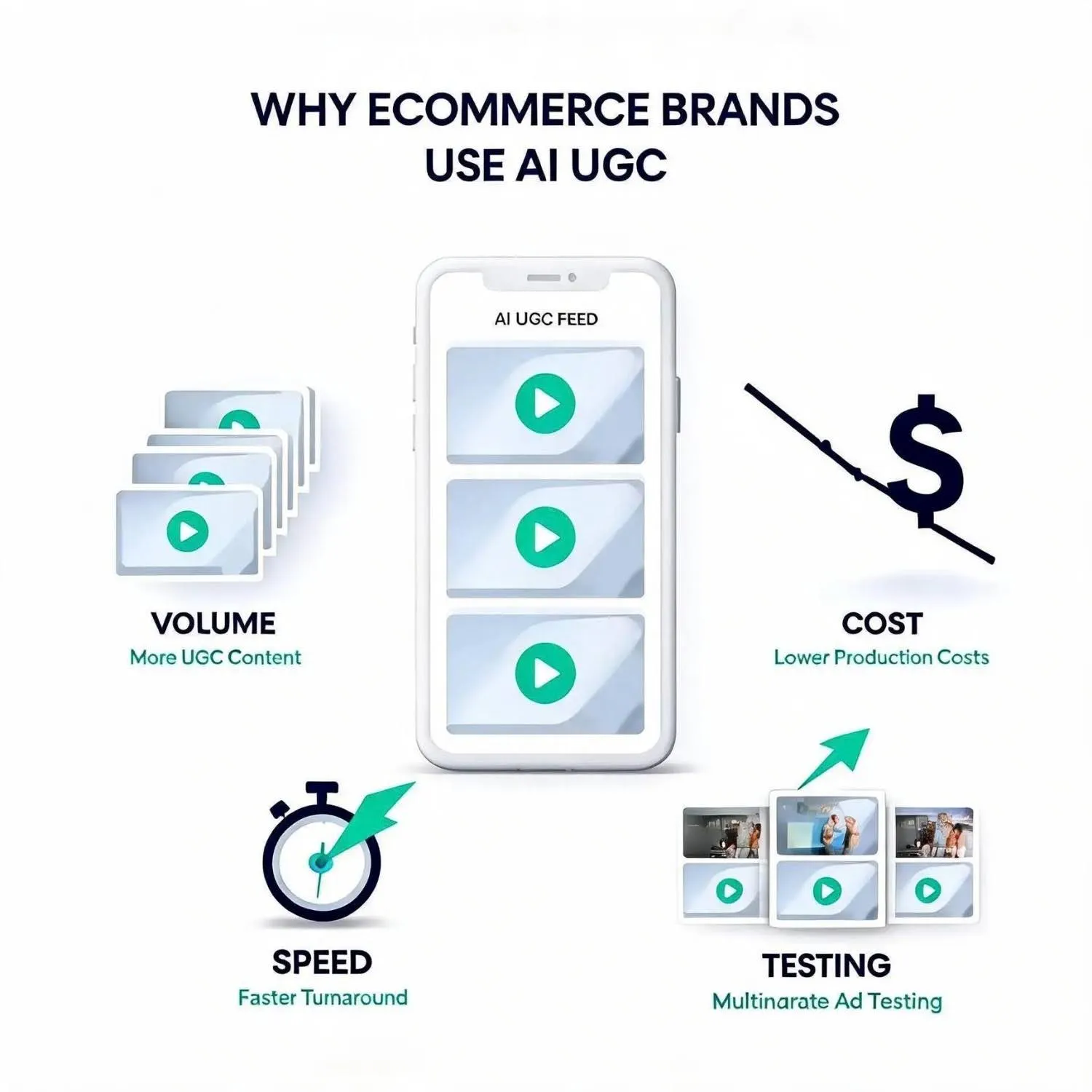
The shift toward AI UGC is not happening because the technology is cool. Ecommerce brands are adopting AI UGC because it solves real operational problems that traditional content production cannot.
The Volume Problem
Paid social advertising in 2026 rewards volume. Facebook and Instagram's ad algorithm performs best when it has multiple creative variations to test against different audience segments. A brand running just two or three ad creatives is at a structural disadvantage compared to a competitor testing 15 to 20 variations.
Real UGC and creator content cannot keep up with that demand. A single UGC creator delivers one to three videos per project, and the turnaround is typically five to ten business days. AI UGC tools can generate 10 to 20 creative variations in a single afternoon, giving the algorithm enough material to optimize against.
The Cost Problem
UGC creator pricing has risen steadily. The average cost per UGC video in 2026 sits around $200 to $300 for a short-form clip, with premium creators charging $400 to $500 or more. For a brand testing five new ad angles per week, that adds up to $4,000 to $6,000 per month in creator fees alone.
AI UGC collapses that cost. After the initial tool subscription (typically $20 to $100 per month depending on the platform), the marginal cost per piece of content is close to zero. A brand spending $50 per month on an AI tool can produce the same creative volume that would cost $5,000 or more through traditional creator sourcing.
The Speed Problem
Ecommerce moves fast. A product launches Monday, and ads need to run Tuesday. A competitor drops a viral TikTok, and you need a response creative by end of day. A flash sale goes live in 48 hours, and the ad team has no fresh assets.
Real creator workflows cannot operate at that speed. Briefs need to be written. Creators need to review them. Products need to be shipped to the creator. Content needs to be filmed, edited, reviewed, and approved. The fastest turnaround from a professional UGC creator is typically three to five days. AI UGC can produce a finished asset in under an hour.
The Testing Problem
The most successful ecommerce ad accounts test aggressively. Different hooks, different visual styles, different product angles, different CTAs. Each test requires a new piece of creative. If each new creative costs $200 and three days, testing becomes expensive and slow.
AI UGC makes testing cheap and fast. Generate five versions of the same ad with different hooks, different backgrounds, or different model presentations. Run all five. Kill the underperformers and scale the winner. Repeat next week. The economics of testing shift from "can we afford to test this?" to "can we afford not to?"
Where AI UGC Works Best

AI UGC is not a universal replacement for all content. The format excels in specific use cases and falls short in others. Knowing the difference helps you allocate your content budget wisely and avoid spending on AI where a real person would do a better job.
Product Showcase Ads
Static and video ads that focus on the product, showing it in use, styled in a scene, or presented from multiple angles, are where AI UGC delivers the strongest results. The viewer's attention is on the item, not the person presenting it, so the AI-generated context just needs to look realistic enough to hold attention.
For ecommerce brands running product video ads, AI-generated short clips showing the product in a lifestyle setting or being styled with other items consistently perform on par with creator-shot equivalents. A skincare serum placed on a marble bathroom counter with soft morning light. A pair of sneakers on a doorstep next to a gym bag. A candle on a nightstand with warm, low lighting. Each of these scenes can be generated from a single product photo in minutes, and each looks native to the feeds where they will run.
A/B Testing and Creative Iteration
When the goal is volume and variation rather than polish, AI UGC is the right tool. Generate 10 versions of a product image with different backgrounds and lighting. Test three hooks on the same product demo video. Compare casual phone-style imagery against studio-quality stills. AI UGC makes this kind of creative iteration affordable for brands at every budget level.
The practical benefit is speed of learning. A brand that tests 15 creative variations per week learns what resonates with its audience 5x faster than a brand testing three variations per month. Over a quarter, that compounding knowledge advantage translates directly into lower cost-per-acquisition and higher return on ad spend. AI UGC makes the high-velocity testing approach accessible to brands that could never afford it with creator-produced content alone.
RELATED READING: Top 7 AI Video Generator Tools in 2026, Ranked by Use Case
Catalog-Scale Content
Brands with large product catalogs (50 to 500 SKUs) face a content math problem: every product needs multiple images and at least one video for ads. Producing that volume of content with real creators or photographers is financially impractical for most small and mid-size brands. AI UGC tools scale content production proportionally to the catalog size without proportional cost increases.
A jewelry brand with 200 SKUs, for example, can generate lifestyle and on-model images for every piece in its collection in a matter of days using AI tools. Pairing those with clean studio-quality listing photos for each product's hero image gives the full catalog a professional, consistent foundation. Doing that same work with a photographer and model would take weeks and cost thousands of dollars. For sellers adding new products frequently, the ability to generate listing-ready visuals on the same day a product arrives eliminates the content bottleneck that slows down time-to-market.
Seasonal and Promotional Content
Holiday campaigns, flash sales, clearance events, and seasonal product drops all need timely creative that will be used for a few weeks and then retired. Investing heavily in professional creator content for a two-week campaign is hard to justify. AI UGC gives you seasonal-quality creative at a cost that matches the short lifespan of the content.
A practical example: a clothing brand running a Black Friday sale can generate holiday-themed lifestyle images for its top 20 products in a single AI photoshoot session, then use those images across ad campaigns, email headers, and social posts for the entire BFCM window. After the sale ends, the seasonal content is retired, and the brand has spent a fraction of what a traditional photo shoot would have cost for the same coverage.
Retargeting Ads
Retargeting audiences have already seen your brand. Creative fatigue sets in faster with warm audiences than with cold ones. AI UGC lets you refresh retargeting creative frequently, showing the same product in new contexts to keep the ad feeling fresh across multiple touchpoints.
For retargeting specifically, varying the lifestyle scene around the same product is a simple and effective strategy. A customer who saw a handbag on a white background in the first ad sees the same handbag in a coffee shop scene in the retargeting ad. The product is familiar, the context is new, and the ad feels like a different creative even though the core message has not changed.
Where Real Creators Still Win
AI UGC is a production tool, not a replacement for human authenticity. In several important contexts, real people produce content that AI cannot match, and using AI in those situations can actually hurt your brand more than help it.
Authentic Testimonials and Reviews
When a real customer talks about their experience with a product, the credibility comes from the person, not the production quality. A genuine, slightly imperfect customer review filmed on a phone carries more persuasive weight than a polished AI avatar delivering a scripted endorsement. For testimonial-driven ad formats, real people still win.
The difference is subtle but powerful. A real customer pauses, chooses their words, and speaks from experience. An AI avatar delivers a script fluently and evenly. Audiences have become remarkably good at detecting that evenness, and when they do, the content loses the very quality it was designed to create: trust.
For ecommerce brands, real customer testimonials remain the highest-converting ad format in categories where purchase anxiety is high. Skincare, health supplements, electronics, and high-ticket fashion all benefit from content where a real buyer shares genuine feedback. AI cannot manufacture that credibility, and attempting to fake it risks a brand trust violation that is hard to recover from.
Audience-Building and Community Content
An AI persona cannot build a genuine community. Real influencers and UGC creators bring their own audiences, their own credibility, and their own creative perspective. For brands that need to grow awareness and build trust with new audiences, real creator partnerships deliver reach and social proof that AI-generated content cannot replicate.
Community building is relational. A real creator responds to comments, shares behind-the-scenes moments, and creates a two-way connection with their followers. An AI persona can post consistently, but it cannot have a conversation. For brands at the early growth stage, where building trust with a skeptical audience is the primary challenge, real human creators are worth the investment.
Content Requiring Personal Experience
Unboxing videos, first-impression reactions, "get ready with me" content, and day-in-the-life vlogs all rely on authentic human experience. The value of these formats comes from watching a real person interact with the product in real time. AI can mimic the visual format, but viewers can feel the difference, and engagement metrics reflect that gap.
A real unboxing has surprise, texture, genuine reactions. An AI-generated unboxing has a script. For content formats where the emotional response of the presenter is the selling point, real people remain irreplaceable.
Platform Compliance and Disclosure
Regulatory guidance around AI-generated content is evolving. The FTC has increased scrutiny on deceptive advertising practices, including AI-generated endorsements that could be mistaken for real customer testimonials. Brands using AI UGC should disclose the AI-generated nature of the content, especially for any format that could be interpreted as a personal testimonial or product review. Transparency protects both the brand and the consumer.
Several social platforms are also implementing disclosure requirements for AI-generated content. Staying ahead of these requirements by proactively labeling AI content protects your brand from enforcement risk and signals to your audience that you operate with integrity. Shoppers increasingly respect brands that are upfront about using AI, and the trust earned from that transparency can outweigh any short-term benefit of passing AI content off as real.
RELATED READING: 35 AI Prompts for Instagram Influencer Photos
How to Build an AI UGC Workflow for Your Brand
If you are ready to start using AI UGC, here is a practical framework for building it into your content operations without overhauling your entire marketing stack.
Start With Product Photography, Not Video

AI-generated lifestyle product photos are the most reliable and consistent form of AI UGC available today. The technology for placing products into realistic scenes, on diverse models, and in varied environments is mature and produces results that are difficult to distinguish from real photos.
Start here. Generate lifestyle and on-model product shots for your top 10 products. Use them as ad creatives and secondary listing images. Test them against your existing product photos and measure the performance difference before investing in AI video. Most brands see an immediate improvement in click-through rate when they replace plain white-background product shots with lifestyle images that look like real customer photos.
The workflow is simple: upload a clean product photo, remove the background if needed, select a lifestyle scene or model, and export the finished image. Each product takes two to three minutes. A catalog of 20 products can have a full set of AI UGC-style images ready in under an hour.
Use AI Video for Hook Testing, Not Full Campaigns
AI video UGC is powerful for rapid hook testing and creative iteration, but the current generation of AI avatars is not yet at the level where a full brand campaign should rely exclusively on digital presenters. Use AI video to test which hooks, angles, and messaging resonate, then invest in real creator content for the winning angles that will scale.
A practical testing workflow: write five different hooks for the same product. Generate a short AI video for each hook. Run all five as ads with a small budget. Within 48 hours, your data will tell you which hook wins. Take that winning hook and brief a real creator to produce a polished version. You get the speed of AI for the testing phase and the authenticity of a real person for the scaling phase.
Keep a Human in the Loop

AI UGC tools generate content quickly, but every piece should be reviewed before it goes live. Check that the product looks accurate in the generated image. Verify that the model's styling matches your brand. Confirm that the lifestyle setting is appropriate for your target audience. A five-minute review pass catches the occasional AI artifact or off-brand output that could undermine the credibility the content is designed to build.
Common things to watch for during review:
- Product color accuracy (AI can shift colors slightly)
- Text or logos on the product that may appear distorted
- Model poses that look unnatural or stiff
- Background elements that do not match the product category
- Lighting inconsistencies between the product and the scene
Blend AI and Real Content Strategically
The strongest content strategies in 2026 use both AI and real content, each deployed where it performs best. AI UGC handles the high-volume, high-frequency content needs: ad creative variations, listing images, seasonal refresh, retargeting creative. Real creators handle the high-credibility, high-impact content: testimonials, community building, influencer partnerships, and brand storytelling.
A practical split for most ecommerce brands: allocate 30 to 40% of your content budget to real creator partnerships and organic UGC sourcing. Use AI UGC to cover the remaining 60 to 70% of your visual production needs. Adjust the ratio based on where your brand is in its growth cycle. Early-stage brands building awareness may lean more heavily on real creators. Established brands scaling ad spend may lean more heavily on AI volume.
Track Performance Separately
Keep AI UGC and real creator content in separate ad sets or at least tagged separately in your reporting. Measuring their performance independently tells you where each format delivers the strongest return and helps you allocate budget more precisely over time. Blending them into a single reporting bucket makes it impossible to optimize the ratio between the two.
Start Creating AI UGC Content With Blend
For ecommerce brands, the most practical entry point into AI UGC is product photography. Blend's AI-powered product photography tools generate lifestyle scenes, on-model product shots, and short-form product videos from a single product photo. The output looks like content a real customer or creator would produce, but it costs a fraction of the price and takes minutes instead of days. Upload a product image, generate creator-style visuals, and start testing them in your ad campaigns today.
Frequently Asked Questions
What is AI UGC?
AI UGC is user-generated-content-style creative made with AI tools instead of real people. The output mimics the look of organic customer photos and videos for use in paid ads, social posts, and product listings.
Why do brands use AI UGC for ads?
AI UGC solves the volume, cost, and speed problems of traditional content production. Brands can generate dozens of ad variations quickly and cheaply, giving paid social algorithms more creative to test and optimize against.
How is AI UGC different from real UGC?
Real UGC is created by actual customers or paid creators. AI UGC is produced using AI-generated models, scenes, and video avatars. Real UGC carries more personal authenticity. AI UGC offers more control, speed, and cost efficiency.
Can AI UGC replace human creators?
Not entirely. AI UGC works best for product showcase content, ad creative testing, and catalog-scale imagery. Real creators still outperform AI for testimonials, community building, and content requiring genuine personal experience.
How do I create AI UGC content for my brand?
Start with AI product photography. Upload a product photo to an AI tool, generate lifestyle scenes and on-model shots, and use the output as ad creatives and listing images. Add AI video once you have validated the static content approach.
Is AI UGC content effective for paid ads?
Yes, particularly for product showcase ads, retargeting creative, and A/B testing. AI-generated product imagery often performs on par with creator-shot equivalents in direct-response ad campaigns where the product is the focal point.