


Sunglasses photography can be surprisingly challenging. While sunglasses may seem like a simple product to shoot, reflective lenses, glossy frames, and unwanted glare can quickly turn a photoshoot into a frustrating experience. If you run an ecommerce store, or if you are someone who creates content for eyewear on social media, then you need to learn the dos and don’ts of eyewear photography.
The first thing you need to know is how light interacts with reflective surfaces. And wyou can capture professional-looking photos that showcase every detail of your product. Better yet, tools like Blend can help you turn basic product shots into polished marketing assets without spending hours editing.
In this guide, you will learn how to master sunglasses photography, avoid common mistakes, and create images that help your products stand out online.
Why Sunglasses Photography Matters
When customers shop online, they can't pick up your products or try them on. Your photos become their primary source of information.
Strong sunglasses product photography helps you:
- Build trust with shoppers
- Highlight lens and frame quality
- Improve click-through rates
- Increase conversions
- Reduce product returns
- Create a professional brand image
For eyewear brands, image quality can directly influence buying decisions. A clear, detailed photo helps customers feel more confident about making a purchase.
A Step-by-Step Studio Setup for Sunglasses Photography
If you are struggling with reflections, glare, or inconsistent product images, this simple studio workflow can dramatically improve your results. Whether you are creating sunglasses product photography for an ecommerce store or building content for social media, following a repeatable setup helps you achieve cleaner, more professional-looking images.
Step 1: Clean the Eyewear Thoroughly
Before you touch your camera, prepare the product. Wear microfiber gloves to avoid fingerprints and wipe down the frames and lenses using an anti-static microfiber cloth.
Dust particles, smudges, and lint may seem invisible to the naked eye, but they become highly noticeable in high-resolution sunglasses photography. Every speck of dust can act like a tiny mirror under studio lighting, creating distractions that require extra editing later.
Step 2: Position Your Diffusion Barriers
Lighting is the most important element in successful sunglass photography. Place two large softboxes at 45-degree angles on either side of the sunglasses. This creates soft, even illumination while reducing harsh reflections on the lenses and frames.
If you still notice hotspots or bright glare on the frame, position a large white foam board or sheet of diffusion paper close to the product. This creates a clean white surface for the sunglasses to reflect, producing smoother highlights and a more premium appearance.
Step 3: Angle the Camera and Eliminate Glare
Mount your camera on a sturdy tripod slightly above the sunglasses and angle it downward toward the product. This position often reduces unwanted reflections while showcasing the frame shape more effectively.
If you can see your camera reflected in the lenses, use a simple professional trick. Cut a small hole in a large piece of black cardstock and place it in front of the camera lens. Shoot through the hole so the sunglasses only "see" a black surface instead of your camera setup.
This technique is commonly used in professional eyewear photography and can significantly reduce distracting reflections.
Step 4: Dial In Your Camera Settings
Switch your camera to Manual Mode for maximum control. For most sunglasses product photography setups, use an aperture of f/8 or f/11 to keep the entire frame sharp from front to back. Set ISO to 100 to minimize digital noise and preserve image quality.
For even greater reflection control, attach a circular polarizing filter to your lens. This allows you to physically reduce glare and improve lens clarity directly in-camera, resulting in cleaner images and less post-processing work.
Once you have captured a sharp, well-lit image, you can use Blend to transform it into professional ecommerce visuals, lifestyle scenes, or branded marketing assets without spending hours on manual editing.
Best Lighting Setup for Sunglasses Product Photography
Lighting can make or break your photos. Here are some things you need to remember while taking pictures of sunglasses:
Use Soft, Diffused Light
Harsh lighting creates strong reflections and glare. Softboxes, diffusion panels, and light tents help spread light evenly across the product while maintaining lens visibility.
Try Side Lighting
Positioning lights on either side of the sunglasses helps reveal frame details while minimizing distracting reflections.
Use Natural Window Light
If you don't have studio lights, indirect window light can work surprisingly well. Place the product near a large window and use a white reflector to bounce light back onto the sunglasses.
Experiment with Backlighting
A subtle backlight can help separate the sunglasses from the background and add dimension to your photos.
Camera Settings for Professional Results
The best camera settings depend on your equipment, but these settings provide a reliable starting point:
- Aperture: f/8 to f/11
- ISO: 100
- Shutter Speed: Adjust based on lighting
- White Balance: Match your light source
- Focus Mode: Manual focus
Using a tripod helps ensure maximum sharpness and consistency across multiple products.
Capture Multiple Angles
Customers want to see every detail before purchasing.
Include:
- Front view
- Side view
- Folded view
- Top view
- Close-up lens details
- Hinge details
- Branding and logo shots
These additional angles improve customer confidence and provide a more complete understanding of the product.
Creative Sunglasses Photography Ideas
Once you have captured your standard ecommerce images, you can create additional content for advertising and social media.
1. Lifestyle Photography
Show your sunglasses in real-world settings such as:
- Beaches
- Outdoor cafes
- Road trips
- Urban environments
- Summer fashion shoots
Photography with sunglasses often performs well because customers can imagine themselves wearing the product.

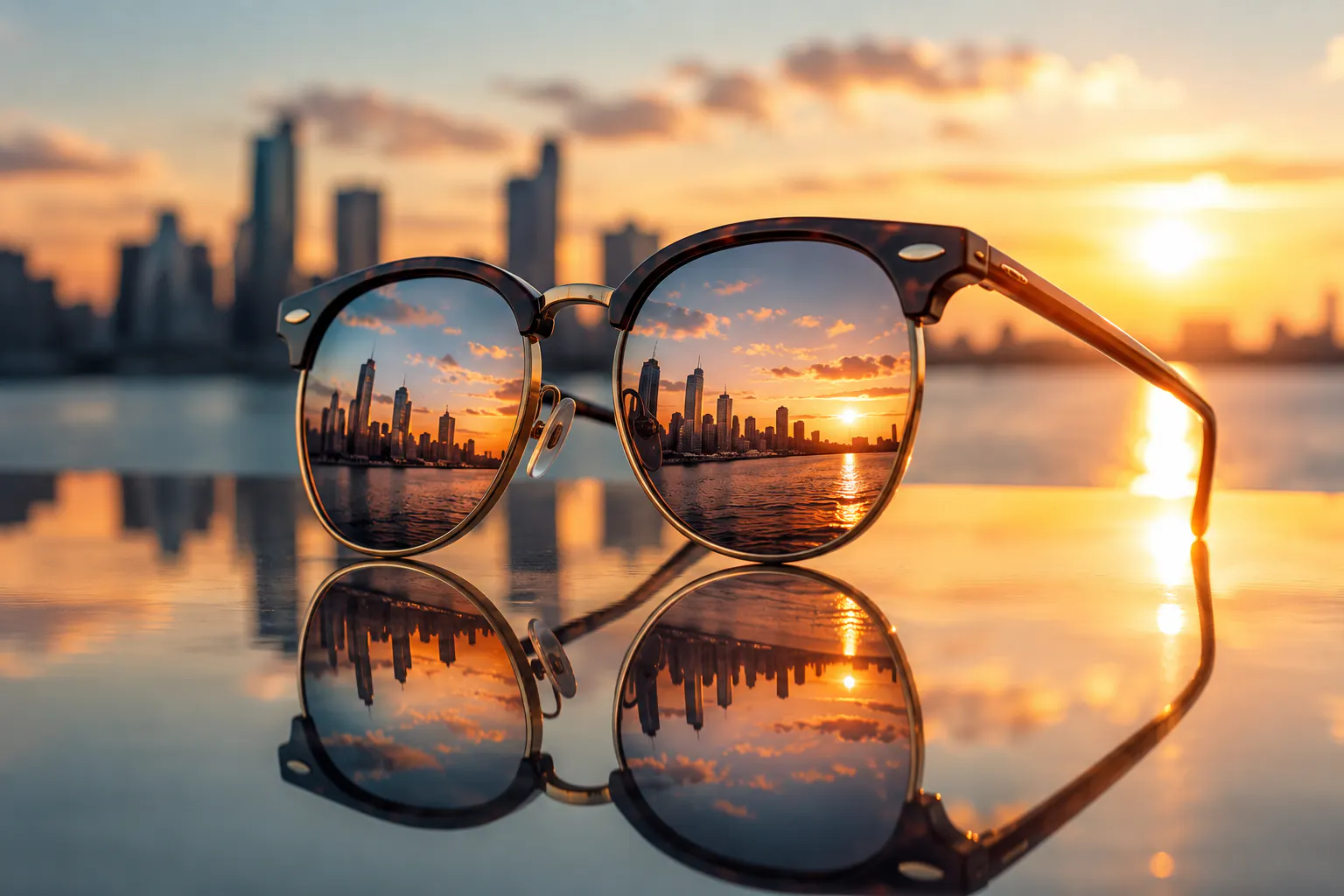
Reflection-Based Photography
While product photography aims to minimize reflections, creative campaigns can use reflections intentionally.
Popular ideas include:
- Sunset reflections
- Ocean reflections
- Skyline reflections
- Architectural reflections
Creative sunglasses photography can help your brand stand out from competitors.
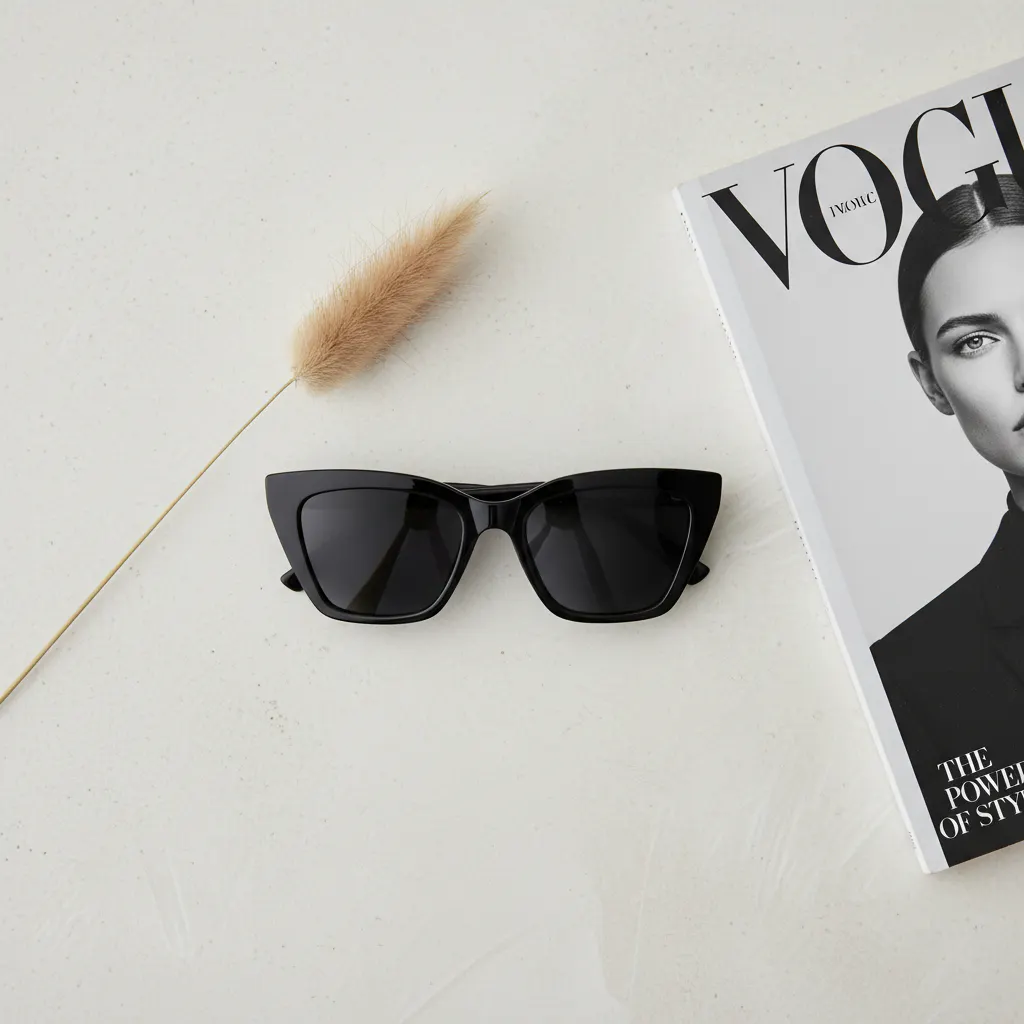
Flat Lay Photography
Arrange sunglasses alongside complementary products such as watches, hats, passports, and travel accessories. Flat lays work particularly well on Instagram and Pinterest.
How Blend Simplifies Sunglasses Photography
Traditional product photography often requires expensive equipment, studio rentals, editing software, and significant time investment. Blend helps simplify the entire workflow. Instead of spending hours creating and editing product images, you can transform simple product photos into professional marketing assets within minutes.
1. Create Studio-Quality Product Images
Blend helps you create polished visuals that look professionally photographed. Whether you are selling aviator sunglasses, polarized sunglasses, luxury eyewear, sports sunglasses, or fashion sunglasses, you can generate clean, high-quality images suitable for ecommerce and advertising.
2. Generate Multiple Background Variations
Different platforms require different image styles. With Blend, you can quickly create:
- White background product photos
- Lifestyle scenes
- Seasonal campaign visuals
- Social media content
- Premium brand imagery
This allows you to maximize the value of every product photo.
3. Reduce Editing Time
Instead of spending hours in editing software, Blend helps streamline tasks such as background removal, unique scene generations, product enhancement, and maintain visual consistency. This makes it easier to maintain a professional look across your entire catalog..
Common Sunglasses Photography Mistakes
Avoid these common errors:
- Using direct flash
- Leaving visible reflections in lenses
- Forgetting to clean the product
- Using inconsistent lighting
- Overediting colors
- Publishing low-resolution images
- Ignoring detail shots
Correcting these issues can dramatically improve the quality of your product photography.
Conclusion
Sunglasses photography requires more attention to detail than most product categories because of reflective lenses and glossy materials. But when you combine strong photography techniques with AI-powered tools like Blend, you can create professional-quality visuals faster and showcase your products in the best possible light.