


If you are wondering how to start a print on demand business, you don’t need a warehouse full of t-shirts or a garage packed with mugs to get started. With print on demand (POD), you create the designs, add them to products, list those products online and let a supplier handle printing and shipping when someone places an order. That means you can test ideas without buying a large amount of inventory upfront.
But there’s more to building a POD business than putting a funny quote on a t-shirt and uploading it to a store. Let’s take a look at how you can do the whole thing easily. With the right tools, you can make some of this work much easier too. Apps like Blend can help you create product visuals and marketing content without spending hours arranging photoshoots or editing every image from scratch.
What Is Print on Demand?
Before you spend a rupee or a dollar, it helps to know what print on demand actually is. Print on demand (POD) is a way of selling custom products that only get made after a customer orders them. Think of t-shirts, hoodies, mugs, tote bags, posters, phone cases and more. Your design goes on a blank product, the supplier handles printing and packing, and the parcel goes straight to your customer.
Many people mix this up with dropshipping. The two are close cousins, but there is one key difference. With classic dropshipping you resell products that already exist. With POD, the product carries your own artwork, so you build a brand instead of just reselling someone else's stock. That is why a POD business feels more like running a small design label than a shop.
What Is Needed to Start a Print on Demand Business?
The good news is that the list is short. Here is what you really need:
- A niche and a rough idea of who you are selling to
- Designs you own or have the right to use commercially
- A print on demand supplier (a fulfillment partner)
- A place to sell, such as your own store or a marketplace
- Good product images and listings
- A simple plan to get people to your store
Notice what is missing: a factory, a big budget and a design degree. You can put all of this together in a week if you stay focused.
How to Start a Print on Demand Business: Step by Step
Step 1: Pick a Niche You Can Actually Stick With
This step matters more than any other. Selling "cool t-shirts" to "everyone" is a fast way to get lost. A narrow niche gives you a clear audience, clearer design ideas and cheaper marketing.
Good print on demand niches usually sit at the meeting point of a passionate hobby and a group of people who love showing off their identity. Think of dog lovers who own a specific breed, home bakers, night shift nurses, book club regulars, gym beginners, or fans of a certain sport. Ask yourself which communities you already belong to, because you will write better slogans and spot better trends when you know the crowd from the inside.
To test an idea, search for it on Etsy, Pinterest and Google. If you find people already buying similar products, that is a good sign. Demand means the niche is real. A little competition is healthy, and a lot of stores selling the exact same design is your cue to niche down further.
RELATED READING: How to Start an eCommerce Business in 2026: 9 Simple Steps
Step 2: Create Designs That People Want to Wear or Use
Your designs are the heart of the business. You do not need to be a professional illustrator, though. Plenty of best sellers are simple: a clever line of text, a small icon, a retro badge or a clean pattern.
If you are starting from scratch, keep these ideas in mind:
- Write for one specific person, not a crowd
- Keep the text short and easy to read at a glance
- Check that you have the rights to every font, image and graphic you use
- Make sure the file is high resolution so it prints crisp
This is also the moment where a design tool earns its keep. Blend is built for online sellers, with an AI powered editor and a library of templates, so you can put together visuals and product graphics without learning complicated software. If you are a beginner who is unsure how to create a print on demand business that looks professional, starting with ready templates takes a lot of the fear out of it.

Step 3: Choose a Print on Demand Supplier
Next, you need someone to print and ship your orders. This is your fulfillment method, and the choice affects your quality, shipping times and profit margin. Popular options include Printify, Printful and Gelato, and each has its own catalog and pricing.
When you compare suppliers, look at more than the base price. Order a sample of the exact product you plan to sell so you can check print quality, fabric feel and packaging yourself. Check where they ship from, since a supplier closer to your customers means faster delivery. Read reviews from other sellers about how they handle mistakes and returns.
Do not skip the sample step. It costs a little, and it protects you from putting your name on a bad product.
Step 4: Decide Where You Will Sell
You have two main routes. You can list on a marketplace like Etsy, or you can build your own store on a platform like Shopify.
Etsy gives you built in traffic, which helps a lot when you are new. Many beginners search for how to start a print on demand business on Etsy because it lets them get a first listing live quickly. The trade-off is that you compete with thousands of other sellers and pay listing and transaction fees. Your own store takes more effort to set up and needs you to bring your own traffic, but you keep control of your brand, your customer list and your pricing.
A sensible plan for many people is to start on a marketplace to learn what sells, then build your own store once you have a few proven products.
RELATED READING: Best AI Photo Editing and Video Apps for Small Businesses in 2026
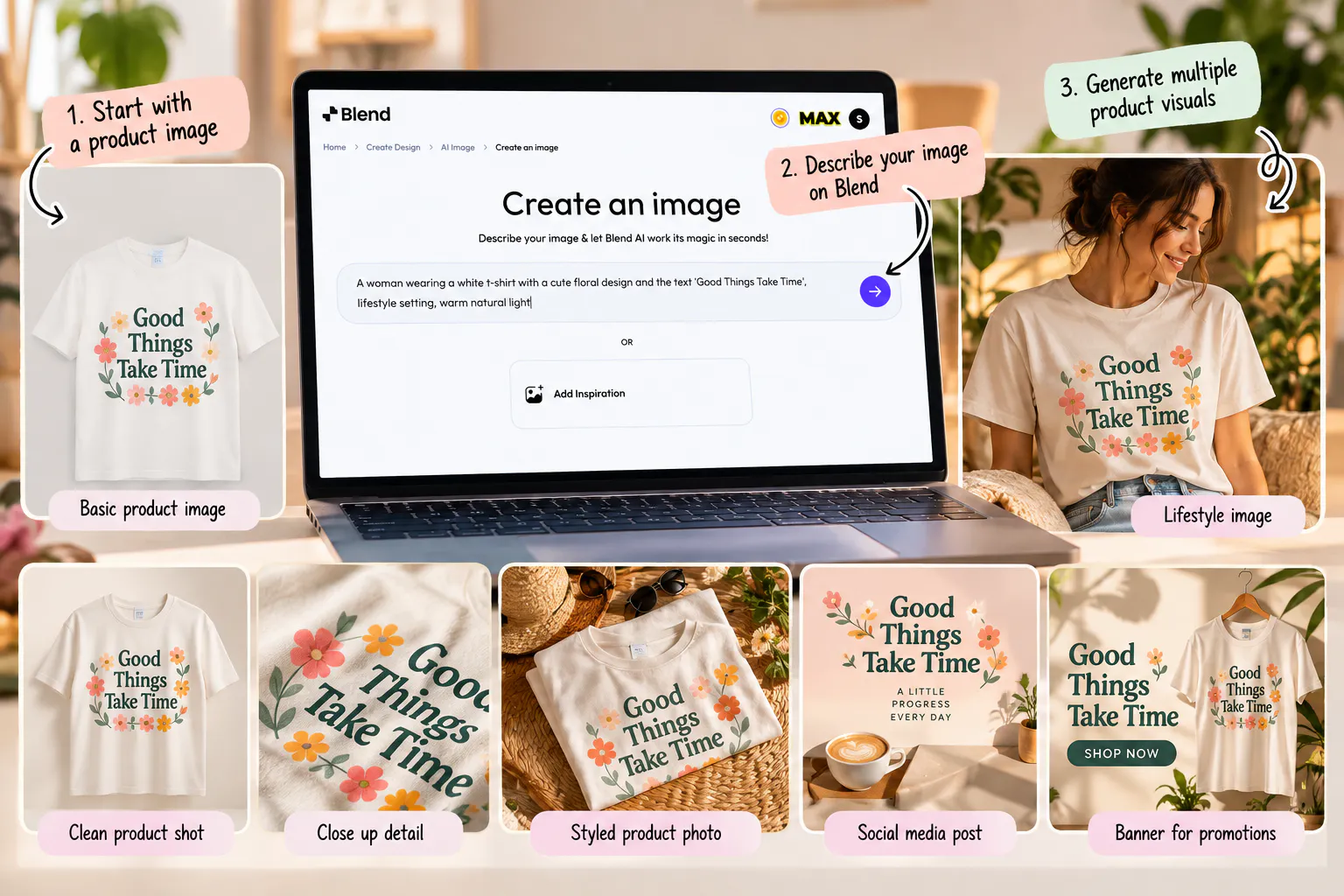
Step 5: Make Your Product Photos and Listings Look Professional
Here is where many new stores lose sales. Customers cannot touch a t-shirt online, so your images do all the persuading. A flat, blurry mockup makes a product look cheap, even when the print is great.
Aim for a mix of images: a clean product shot, a lifestyle style scene, and a close up that shows detail. This is where Blend really helps. It can remove backgrounds, swap in new AI generated backgrounds, and build product visuals from templates, so your listing looks like it came from a real photoshoot without the studio bill. Because you also need graphics for social media, you can use the same tool to build posts and banners that match your brand.
For the listing text, write the way you would describe the product to a friend. Put your main keyword phrase in the title, mention who it is for, describe the fit or material, and add a few honest details. Skip the keyword stuffing, because shoppers and search engines both notice it.
Step 6: Price Your Products So You Actually Profit
Many new sellers guess their prices and later discover they are earning almost nothing. Start with your base cost from the supplier, add shipping if you do not charge it separately, and then account for platform fees, payment fees and any ad spend. What is left is your profit.
As a rough rule, aim for a healthy margin after all of those costs, even if that means a higher price than you first expected. A well designed niche product can often carry a higher price than a generic one, because buyers are paying for the message and the fit with their identity. Test a few price points and see what your customers respond to.
Step 7: Get Your First Customers
A beautiful store means nothing if nobody sees it. Do not try to be everywhere. Pick one or two channels and go deep.
Pinterest works well for home decor, apparel and gift ideas because people search there with buying intent. Instagram and TikTok suit designs with a strong personality. Small communities, like Facebook groups and subreddits in your niche, can also send loyal early buyers if you join in naturally instead of just dropping links. Over time, blog posts and product pages that answer real questions can bring in free search traffic.
Consistency beats bursts of effort. Posting a few times a week for three months will do more for you than posting daily for two weeks and then disappearing. Since you will need a steady flow of graphics, reels covers and pins, having a design tool that lets you build them quickly makes it much easier to stay consistent.
RELATED READING: Visual Marketing: The Complete Guide to Strategy, Tools, and Examples
How Much Does It Cost to Start a Print on Demand Business?
Startup costs for a print on demand business are lower than almost any other product business, though they are not zero. Here is what you might spend money on:
- Samples: a small amount to test quality before you sell
- Store platform: a monthly fee if you use your own store, or listing fees on a marketplace
- Design tools: many have free plans, so you can begin cheaply
- Domain and branding: a small yearly cost
- Marketing: optional at first, but useful once you find a winning product
You can begin with a modest budget and increase spending only when something starts working. That gradual approach is the real advantage of this business model.
Conclusion
Now you know how to start a print on demand business: choose a niche, create designs people want, pick a reliable supplier, present your products beautifully, price with care and keep showing up. The stores that succeed are usually not the ones with the fanciest ideas. They are the ones that look polished and keep improving.
If you want your designs, product photos and social graphics to look professional from day one, try Blend and see how quickly you can go from a rough idea to a listing that is ready to sell.