
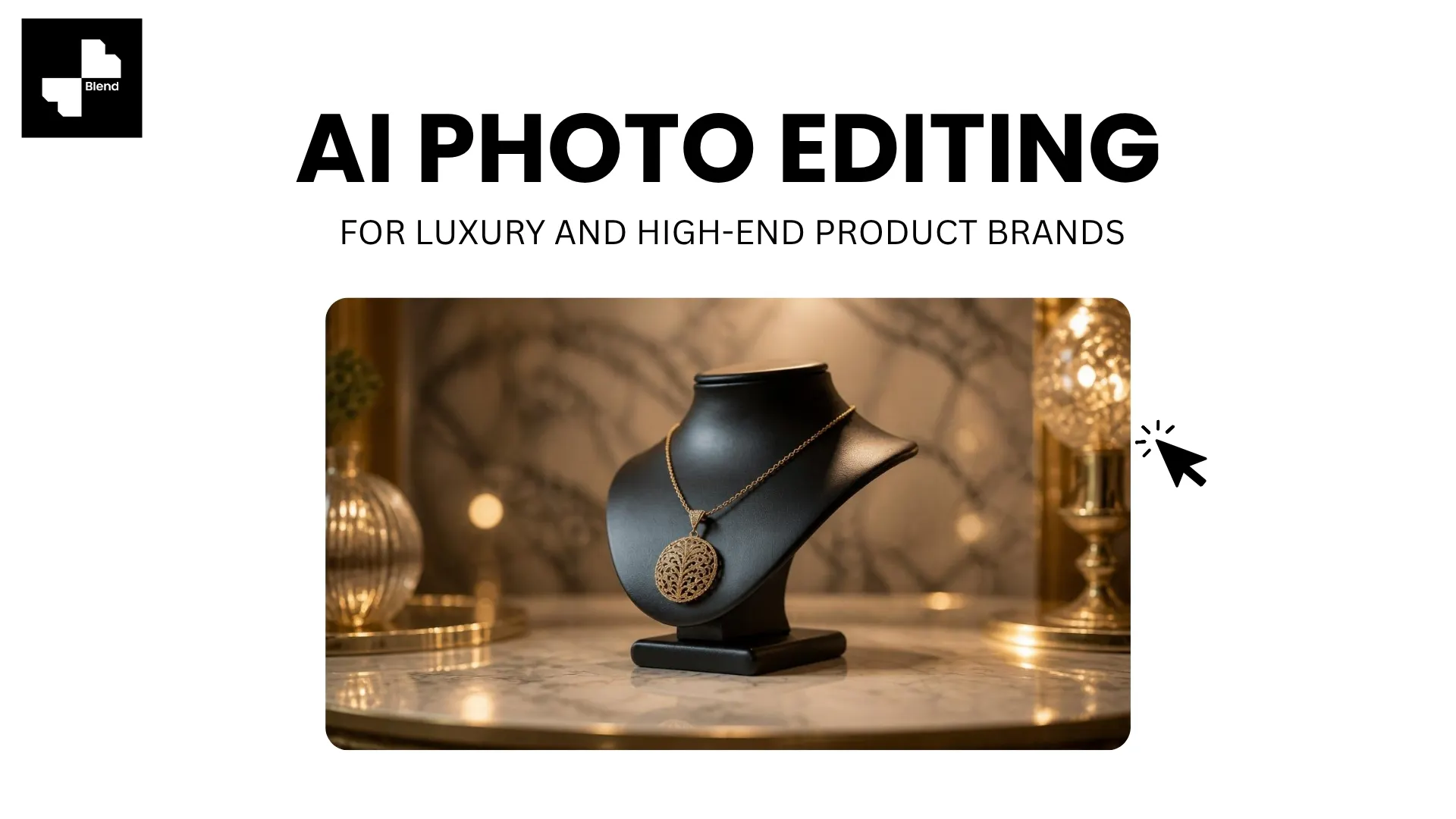



Luxury product brands have a specific problem with AI photo editing. The technology moves fast, the cost savings are real, and every competitor is exploring it. But premium brands cannot afford to look like everyone else, and they definitely cannot afford to look cheap.
A $15 phone case and a $3,000 handbag require completely different visual standards. The phone case needs a clean background and decent lighting. The handbag needs to show the leather grain, the precision of the stitching, the exact color of the hardware, and the way light plays across the finish. If AI editing softens any of those details, you are actively undermining the product's value.
So the question is not whether luxury brands should use AI editing. The question is where it actually adds value without compromising the standards your customers expect.
Why Luxury Brands Are Right to Be Cautious
Most AI photo editing tools were built for volume sellers who need "good enough" product shots at scale. Luxury is a different game. The visual quality is inseparable from the product itself.
Details Are the Product
For high-end watches, fine jewelry, premium leather goods, and luxury beauty products, the details are not decoration. The brushed finish on a watch case, the fire inside a diamond, the hand-stitched thread on a wallet, these are the reasons someone pays a premium. If an AI tool smooths out those textures or shifts the tone of a gold clasp, the image no longer represents the product accurately.
The concern is legitimate. Earlier AI tools often over-processed images, adding a subtle plastic quality that stripped away the tactile richness. A mass-market seller might not notice. A luxury buyer will.
What AI Actually Handles Well in 2026
The tools have improved. The best AI editing platforms now preserve product pixels exactly as uploaded and only modify the surrounding environment.
Where AI adds clear value for premium brands:
- Background removal and replacement. Stripping a showroom background and replacing it with a controlled studio or lifestyle environment.
- Scene generation. Placing a product in a styled setting without physically building the set.
- Consistency at scale. Applying the same lighting, shadow, and framing across every SKU.
- Quick cleanup. Removing dust, minor reflections, or packaging imperfections.
Where human retouching is still worth the cost:
- Jewelry with complex reflections (diamonds, polished metals)
- Products where AI needs to generate parts of the item itself
- Hero campaign images requiring pixel-level creative control
The honest answer is that AI handles production work well, but the hero shot for your homepage may still benefit from a professional retoucher's eye.
Where AI Editing Adds Real Value for Premium Products
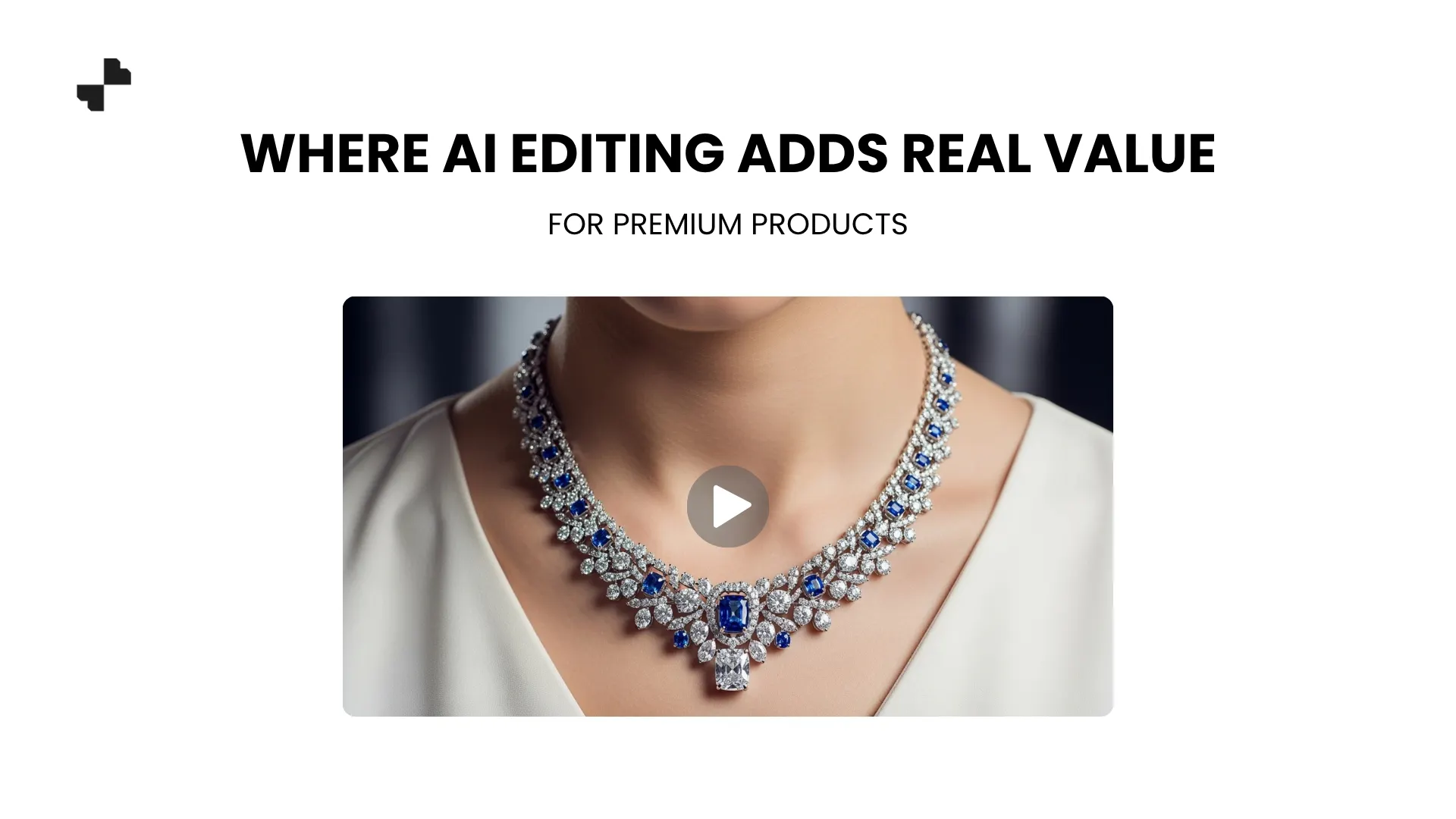
With the right approach, AI editing handles the highest-volume tasks in a luxury brand's visual workflow without touching the elements that need human finesse.
Background Replacement Without Losing the Premium Feel
Most luxury brands shoot products in a studio or showroom, then need those images on clean backgrounds for e-commerce, styled surfaces for social, and lifestyle settings for editorial. Traditionally, each requires a separate shoot or manual compositing.
An AI background generator strips the original environment in one pass. From there, place the product on a white background for listings, a dark slate surface for a catalog, or a styled interior for lifestyle product imagery.
The key to luxury is prompt specificity. A generic "nice background" gives generic results. A prompt like "dark charcoal marble surface, single spotlight from upper left, shallow depth of field" gives you something that feels intentional.
Lifestyle Scenes That Match Your Brand Aesthetic
For professional product photography at the luxury level, the scene needs to feel curated, not generated. The difference between a convincing luxury lifestyle shot and one that reads as AI is usually the specificity of the environment.
Prompts that work well for premium products:
- Leather goods: "Warm-toned wooden desk, brass desk lamp, soft leather journal nearby, afternoon window light."
- Jewelry: "Dark velvet display surface, single spotlight with soft falloff, no competing props."
- Luxury beauty: "White marble vanity, soft diffused bathroom light, a single fresh flower stem."
- Home décor: "Minimalist gallery shelf, neutral plaster wall, warm directional lighting."
The rule for luxury is restraint. Fewer props, cleaner compositions, more deliberate lighting. The product should dominate the frame, with the environment playing a supporting role, not competing for attention.
Getting the Quality Right for High-End Standards
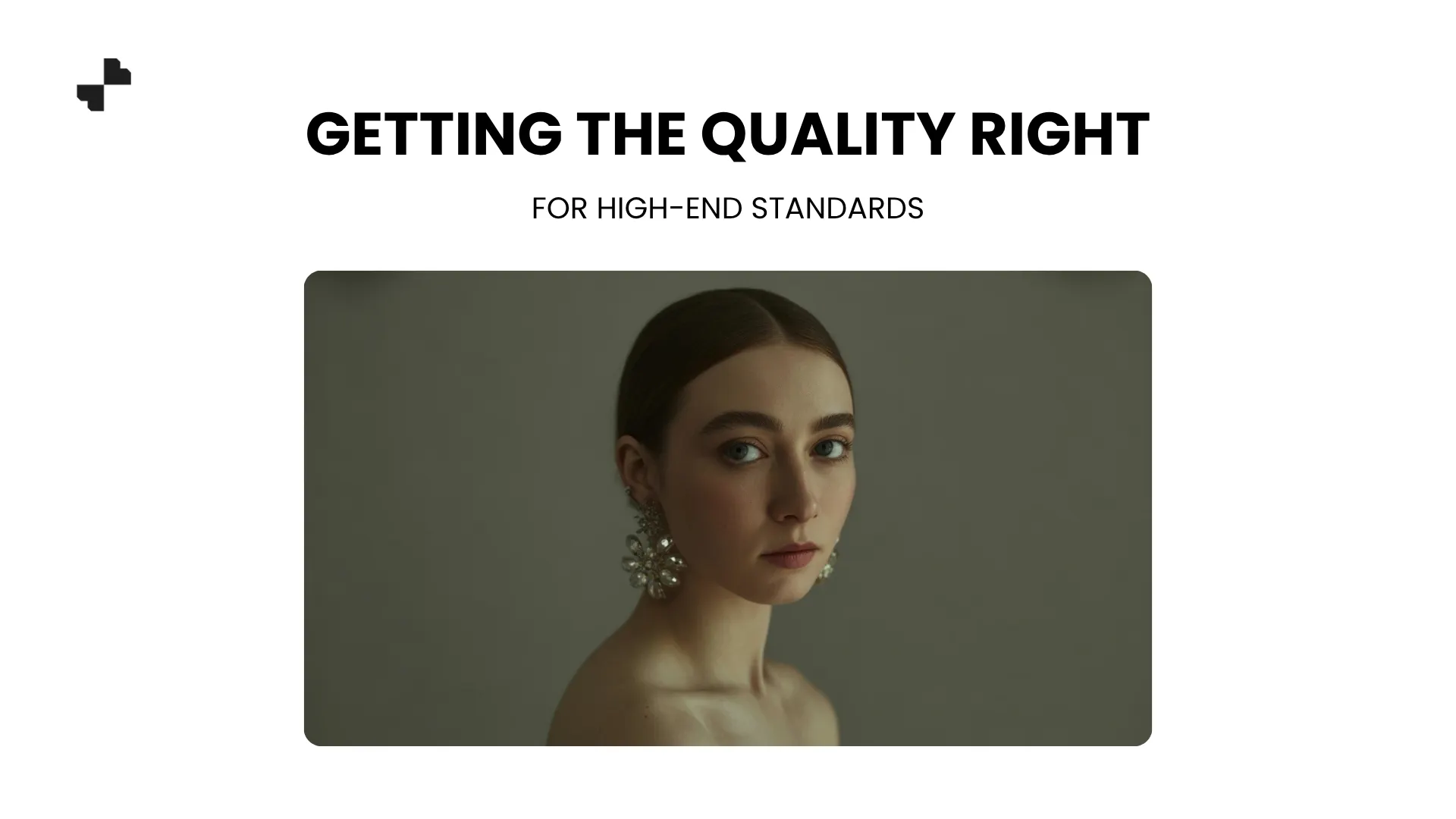
AI editing at the luxury level is less about what the tool can do and more about knowing when to use it and when to stop.
Preserving Texture, Color, and Material Accuracy
Before publishing any AI product images, zoom to 100% and compare against the original. Check three things:
- Material texture. Has the leather grain, fabric weave, or metal finish been preserved? Any softening is unacceptable for luxury.
- Color accuracy. Does the gold hardware still read as gold, not yellow? Is the midnight blue still midnight blue?
- Edge integrity. Are edges clean and sharp, especially around hardware, clasps, or filigree?
If any fail, regenerate or adjust the lighting prompt. In luxury, one inaccurate photo costs more in returns and brand damage than the time spent getting it right.
Cleaning Up Without Overcorrecting
An AI image editing tool is useful for removing dust particles, minor reflections on glass, or a small scuff on packaging. The trap is overcorrection. For luxury products, a bit of natural light interaction, like a soft shadow in a leather fold or a gentle highlight on a polished surface, is part of what makes the image feel real.
Remove flaws. Preserve character. If you find yourself erasing natural shadows or light behavior, you have gone too far.
Scaling Premium Visuals Without Diluting Quality
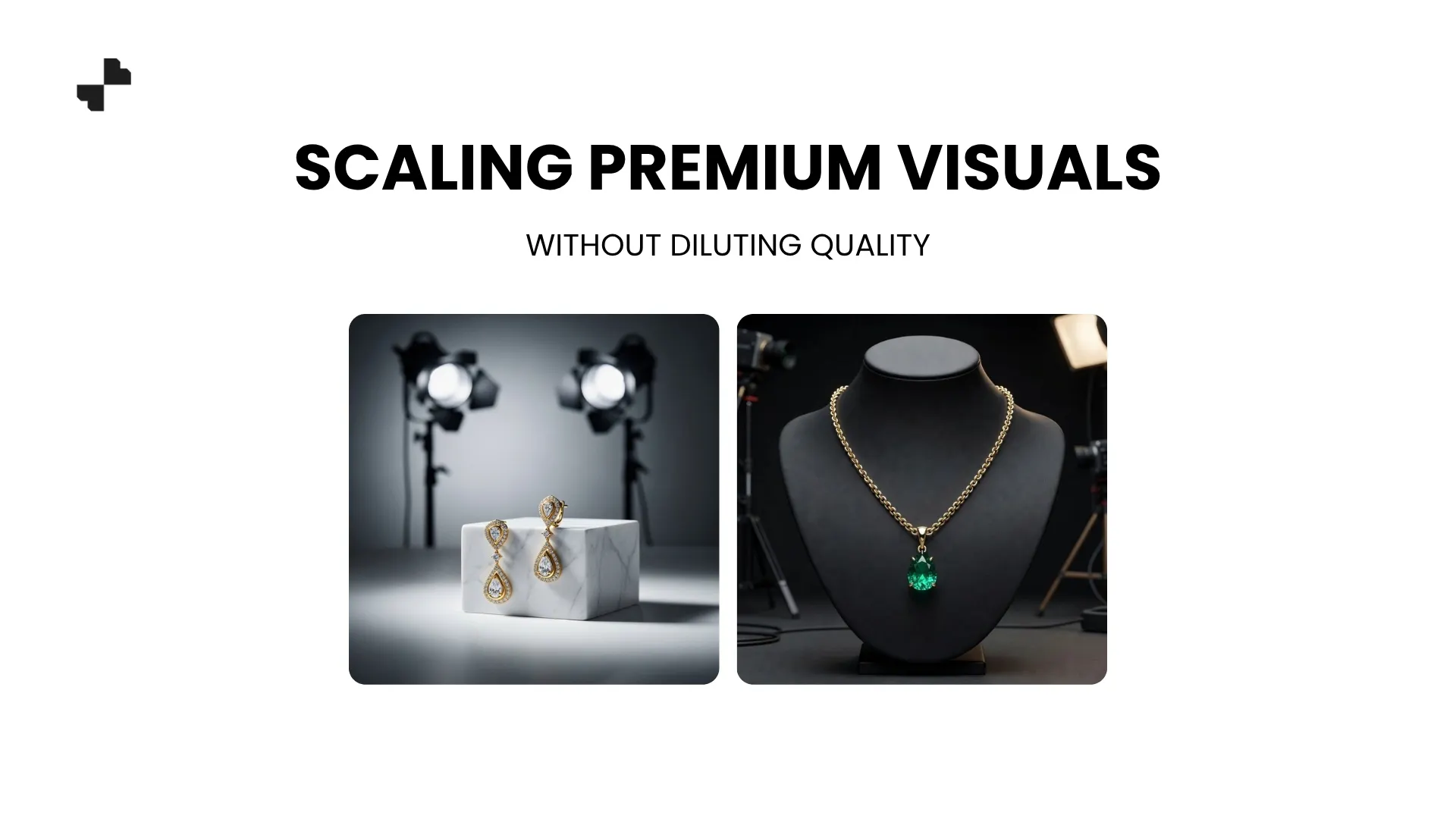
The real ROI of AI editing for luxury brands is not in making individual images cheaper. The value is in multiplying every product photo across channels without reshooting.
Building Reusable Visual Templates
Once you have a scene style that works, whether a dark, moody backdrop for watches or a bright minimalist setup for beauty, save that prompt and apply it across every new product. Consistent product images across a collection create the cohesive catalog aesthetic that luxury shoppers expect.
For brands releasing seasonal collections, building 2 to 3 reusable scene templates means new products can go from warehouse photo to listing-ready image in minutes instead of waiting for a styled shoot.
Extending Stills into Video and Multi-Channel Content
A single well-shot product image can generate a slow pan video for social, a zoom-in detail clip for product pages, and a styled banner for your e-commerce site. AI video tools handle this from a still image.
For luxury, subtle motion works best. A gentle rotation, a slow pull back from a detail shot, or a smooth transition between cutout and lifestyle scene. Avoid fast cuts that feel inconsistent with premium standards.
Premium Visuals at Production Speed
AI photo editing does not replace the craftsmanship behind a luxury brand's best imagery. What it does replace is the repetitive production work that used to take days and thousands of dollars per collection. Blend handles background removal, premium scene generation, catalog consistency, and product video in one platform. Upload your first product photo and see how it looks in a styled setting.
Frequently Asked Questions
Can AI photo editing match the quality standards luxury brands require?
For background replacement, scene generation, and catalog consistency, yes. For hero campaign images with complex lighting or jewelry with intricate reflections, pairing AI with human retouching may still produce the best results.
Will AI editing make my product images look generic?
Only if you use generic prompts. Specific descriptions of surfaces, lighting direction, and mood produce results that feel intentional and brand-appropriate. Treat the AI prompt like a creative brief.
Is AI editing accurate enough for fine jewelry photography?
AI handles the background and environment well. For the jewelry itself, especially diamonds and polished metals with complex light behavior, verify the output carefully. Opaque materials like leather and matte metals are handled more reliably.
How do I maintain brand consistency across my catalog with AI?
Save your best-performing scene prompt and apply it to every new product. Using the same lighting, surface, and mood across your collection creates the cohesive aesthetic luxury shoppers expect.
Can I use AI-edited images for print marketing and lookbooks?
Yes, as long as the output resolution is high enough. Most AI tools generate at 2048x2048 or higher, which works for digital and many print applications. For large-format print, check output dimensions before sending to production.
Where should I draw the line between AI and human editing?
Use AI for production work, including backgrounds, cleanup, catalog shots, and multi-channel formatting. Keep human retouching for hero images, campaign visuals, and any product where light interaction is critical to the sale.