
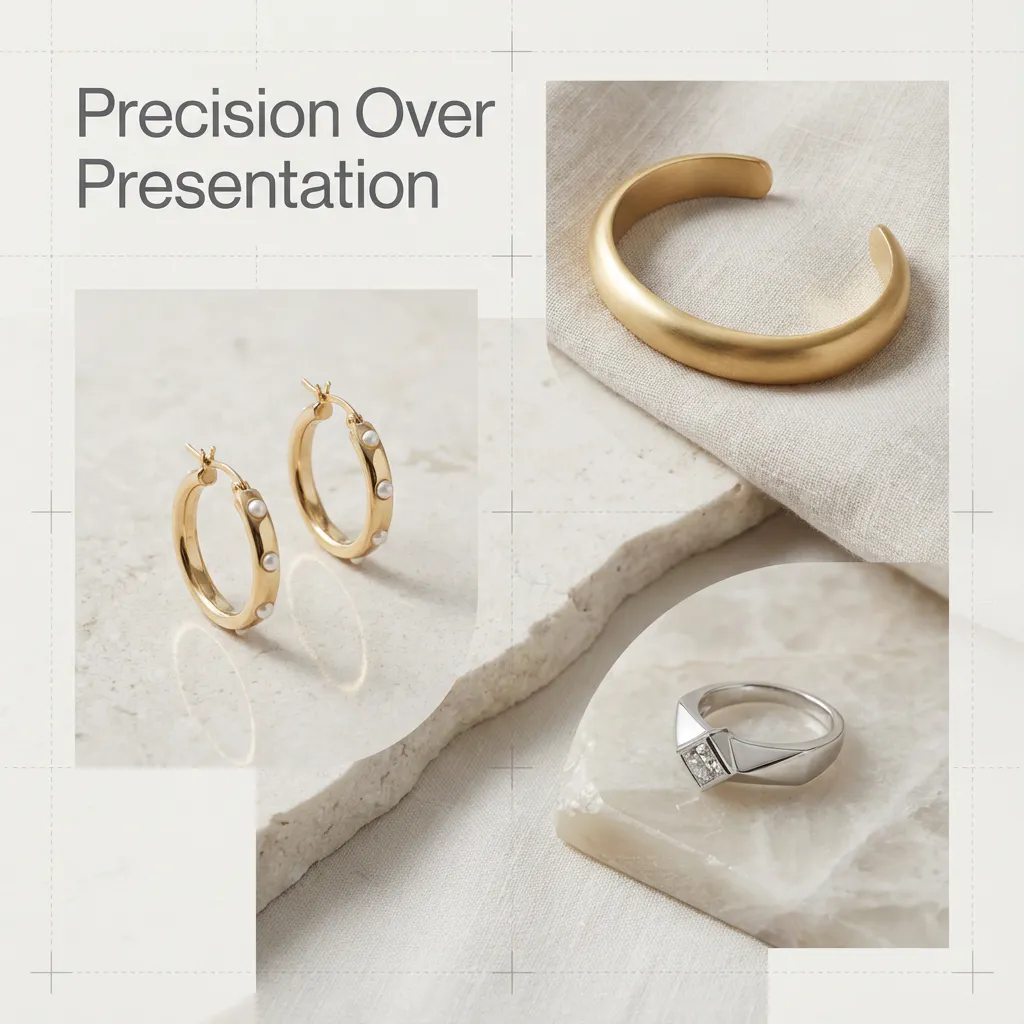
If you’ve been following our recent blogs, you’ve seen how AI fits into different parts of visual production. We started with catalogs and seasonal refreshes, then went deeper into apparel, AI models, and how choices like model selection and customization directly affect results.
As we moved across categories, one pattern became clear:
AI works best when the workflow becomes more disciplined, not more experimental.
Jewellery makes that reality obvious very quickly.
Why Jewellery Changes the Equation
Jewellery behaves differently from clothing.
With apparel, visuals are shaped by factors such as body type, posture, pose, and movement. AI workflows for clothing often focus on managing these human variables.
Jewellery removes much of that complexity.
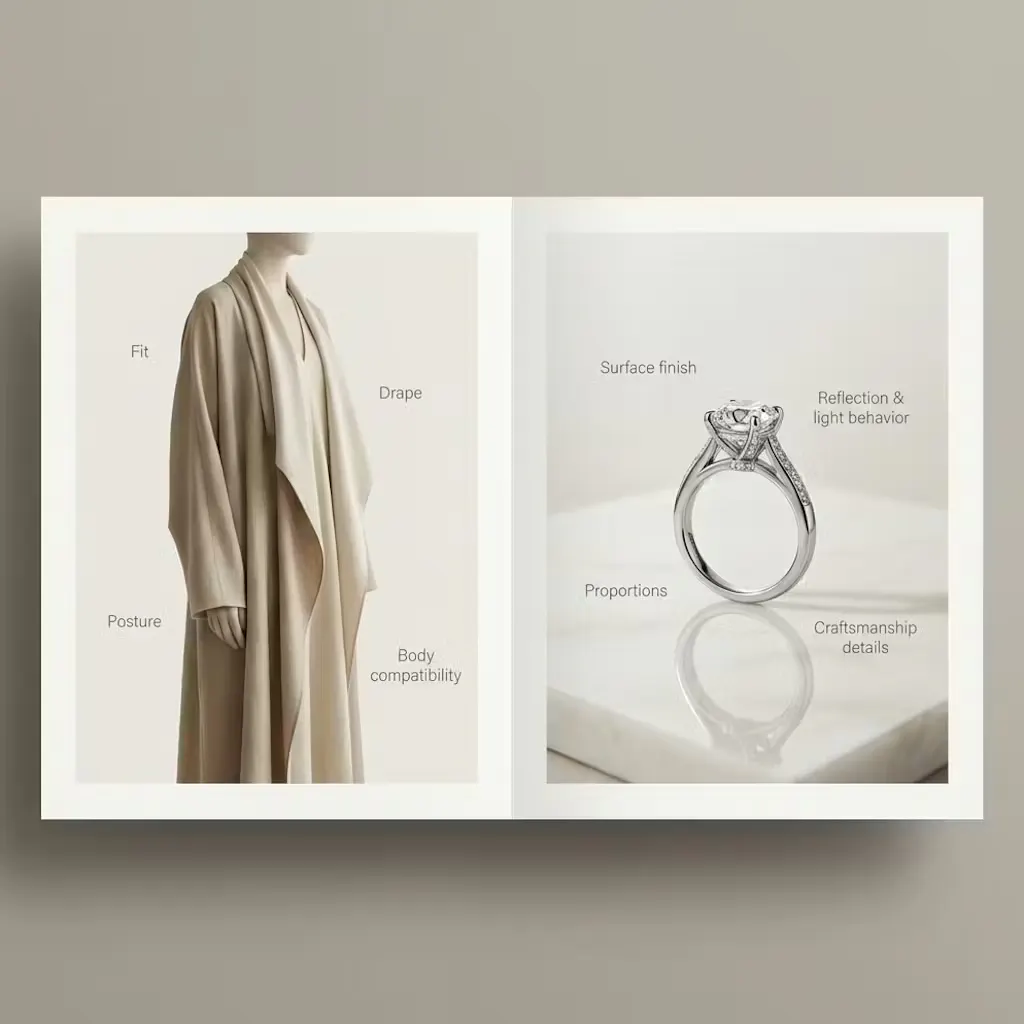
Here, the product itself carries the visual responsibility. There is no movement to soften inconsistencies and no pose to compensate for inaccuracies. Details like surface finish, reflections, proportions, and scale become immediately noticeable.
This naturally shifts the focus toward precision.
Compelling jewellery visuals are not about expression or storytelling. They are about accuracy and clarity.
From Variety to Precision
In our apparel-focused blogs, we often discussed managing variety.
Different models.
Different poses.
Different visual contexts.
This flexibility is useful and often necessary for clothing.
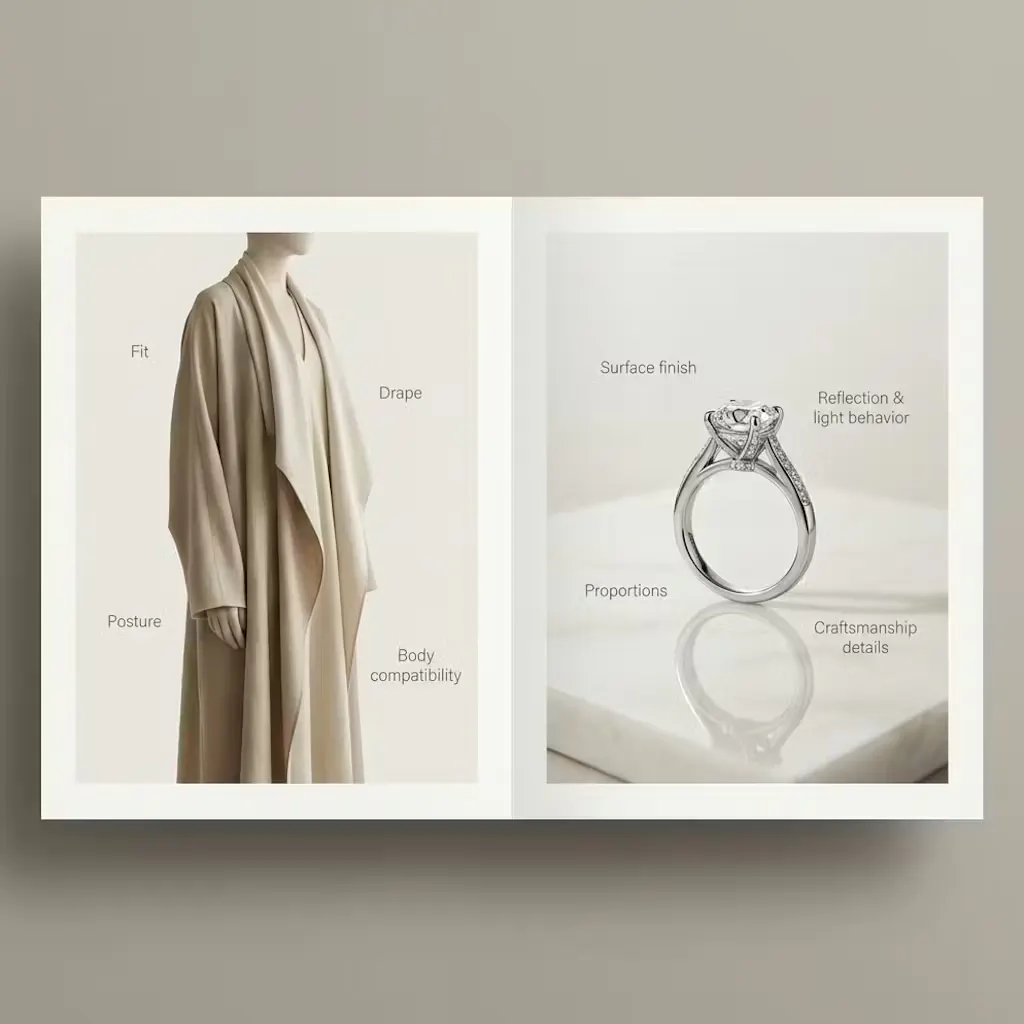
Jewellery works differently. The objective is not to reinterpret the product, but to present it as it is, clearly and consistently. Slight deviations can introduce confusion rather than interest.
This is usually where brands realize that applying the same AI mindset across all categories does not always work. Approaches that feel creative for apparel can add unnecessary complexity when used for jewellery.
Here, the priority shifts from generating options to maintaining consistency.
Where Cost-Effectiveness Actually Comes In
Jewellery visuals are not only about quality. They also directly affect costs.
Traditional jewellery photo shoots involve photographers, studios, lighting setups, and fixed production schedules. Once a shoot is completed, the visuals are locked. Any update for a new season, marketplace, or campaign typically requires another shoot.
With Blend, the cost structure works differently. In actual usage, around 2,500 jewellery sellers generate close to 20,000 AI model images each month using the AI model feature alone.
Because the same product inputs can be reused, sellers are no longer paying for one-time outputs. Lifestyle Shots add contextual variation without requiring reshoots, and credits are consumed per generation rather than per shoot.
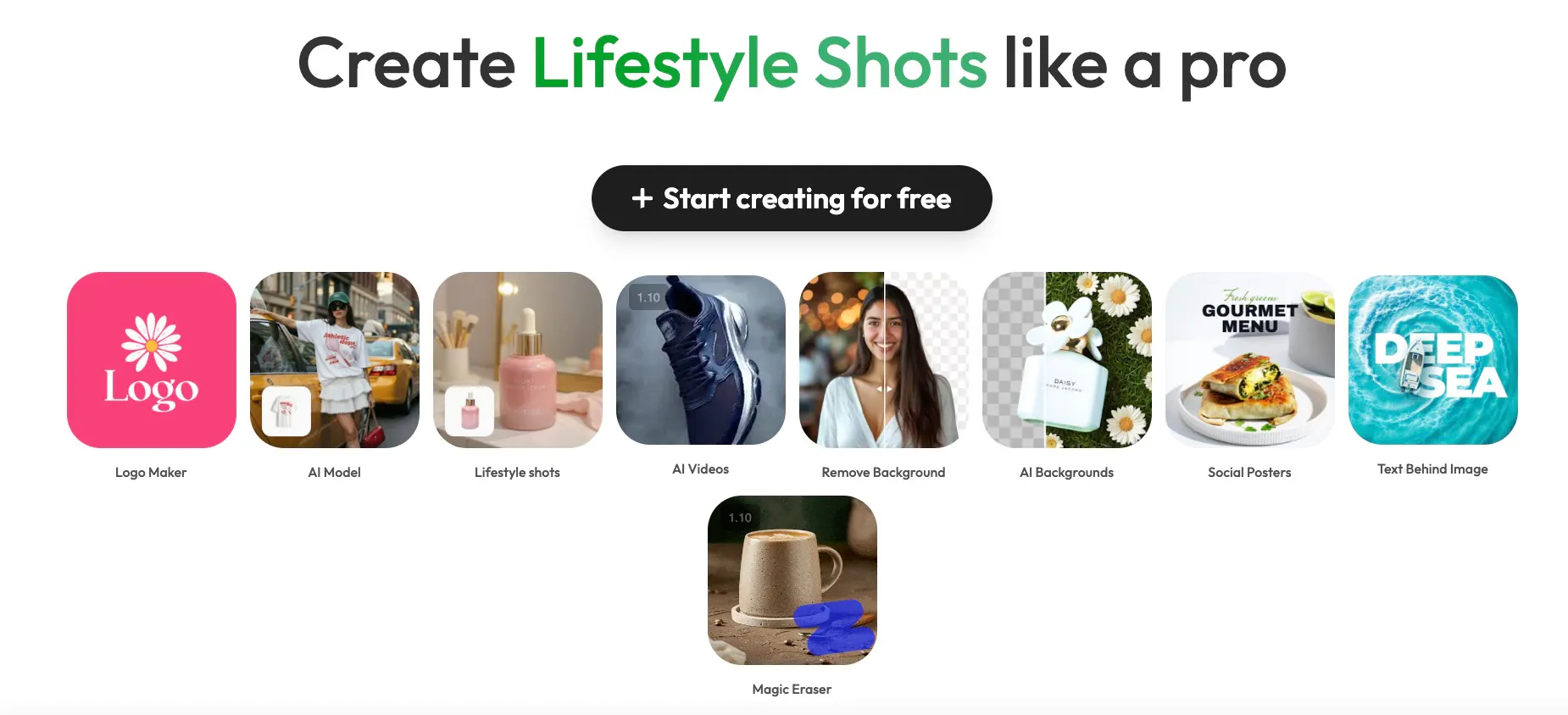
This allows brands to refresh visuals for different use cases without restarting the entire production process.
On Blend’s Pro and Max plans, a single month of usage can often replace what would traditionally require multiple jewellery photo shoots. Even when accounting for high-resolution exports and lifestyle variations, costs remain predictable and substantially lower than repeated studio setups.
This difference is especially noticeable in jewellery, where even small catalog changes can be expensive to reshoot using traditional methods.
How Blend Supports This Approach
Blend is designed to encourage consistency without limiting usability.
Across apparel, jewellery, and catalogs, workflows are structured around a few core ideas:
- Product-first presentation
- Controlled environments rather than dramatic setups
- Repeatable outputs across marketplaces and campaigns
- A growing library of templates and presets
Instead of relying on heavy prompting or constant manual adjustments, the system itself helps reduce unnecessary variation.
For jewellery, this results in visuals that feel stable and dependable rather than overproduced.
This structure also makes it easier to scale catalogs without scaling effort or operational cost.
Jewellery as Part of a Larger Visual System
While jewellery makes these constraints more visible, the same principles apply across categories.
When brands treat AI as a visual system rather than a one-off generator:
- Catalogs remain consistent over time
- Seasonal updates are easier to manage
- Marketplaces, ads, and websites feel aligned
Clothing, jewellery, footwear, and accessories all benefit when visual discipline is applied thoughtfully to each category. So if you can nail your jewellery visuals with AI, then you can easily work with any category.
Final Thoughts
Jewellery does not require more from AI. It requires more care in how AI is used.
That is why it serves as a helpful reference point when thinking about visual quality, scalability, and cost-effectiveness together.
At Blend, workflows are designed with this balance in mind. The focus is not on creating the most attention-grabbing visuals, but on producing reliable ones, consistently and at scale.
When visuals are reliable, catalogs become easier to maintain.
When catalogs are easier to maintain, brands can move faster without compromising trust.
That is where AI delivers practical value.
So dont delay anymore, head over to Blend right now and create your catalogs